 EN
EN  English
 Español

News
 Home / Blogs / Industry News / What impact do rear shock absorbers have on vehicle safety and chassis stability?
 What impact do rear shock absorbers have on vehicle safety and chassis stability?
 2026.01.08
 Industry News
In passenger car chassis systems, rear shock absorbers are often overlooked, but in reality, they play a crucial role in overall vehicle comfort, handling stability, and safety performance.
The Core Function of Passenger Car Rear Shock Absorbers
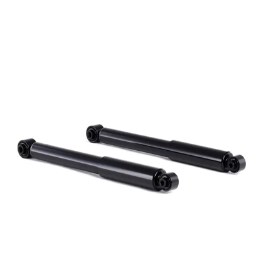
Passenger car rear shock absorbers are mainly installed in the rear suspension system. Their core function is to control the relative movement between the wheels and the body. When the vehicle is driving on uneven roads, the springs absorb the impact, while the shock absorbers, through damping, suppress the repeated vibrations of the springs, allowing the body to quickly return to a stable state. High-performance rear shock absorbers can effectively reduce body sway, improve rear passenger comfort, and enhance the overall stability of the vehicle during acceleration, braking, and cornering.
Structure and Working Principle of Passenger Car Rear Shock Absorbers
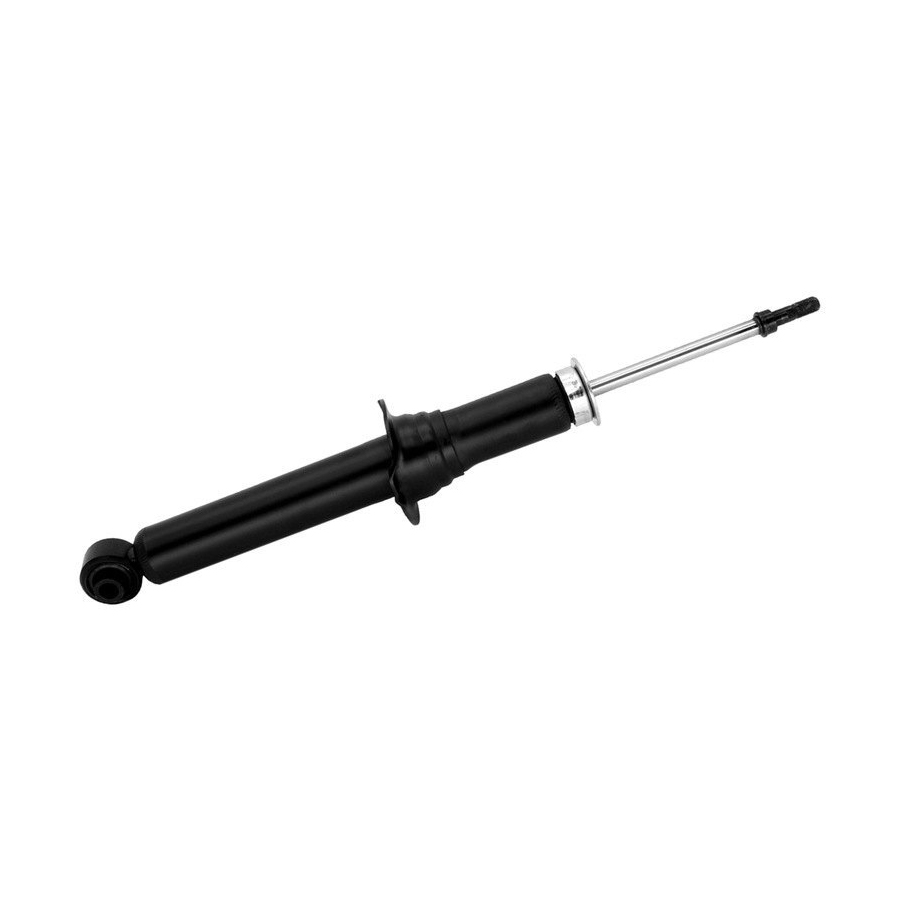
From a product perspective, rear shock absorbers typically consist of a cylinder, piston, piston rod, damping oil, and sealing components. During vehicle operation, the piston moves up and down within the cylinder, and the damping oil flows through a precisely designed valve system, thereby generating a stable and controllable damping force. This damping force converts the energy transmitted from the road surface into heat and releases it, preventing continuous oscillation of the vehicle body. High-quality rear shock absorbers exhibit more stable performance in terms of sealing, durability, and damping consistency, maintaining good damping effects over the long term.
Impact of Rear Shock Absorbers on Comfort and Handling
Passenger car rear shock absorbers not only affect riding comfort but also directly influence the vehicle's handling experience. The stability of the rear suspension determines the vehicle's tracking ability at high speeds or on complex road conditions. High-performance rear shock absorbers ensure that the rear wheels maintain good contact with the ground, reducing rear-end bouncing and lateral sway, thereby increasing driving confidence. At the same time, rear shock absorbers play an important regulatory role in the overall dynamic balance of the vehicle, allowing the vehicle to maintain a stable posture under different load conditions.
Influence of Materials and Manufacturing Processes on Rear Shock Absorber Quality
From a product perspective, the quality of passenger car rear shock absorbers largely depends on the material selection and manufacturing process. High-strength steel and precision-machined piston rods enhance fatigue resistance, while high-quality damping oil ensures stable damping characteristics across varying temperatures. Advanced welding and surface treatment processes improve the shock absorber's corrosion resistance and extend its service life, maintaining reliable performance during long-term operation.
The Relationship Between Rear Shock Absorbers and Vehicle Safety Performance
Although rear shock absorbers are chassis components, their performance directly impacts overall vehicle safety. High-quality passenger car rear shock absorbers help maintain vehicle stability during emergency braking or rapid lane changes, reducing fluctuations in braking distance and lowering the risk of loss of control. Especially on wet or bumpy roads, the damping performance of the rear shock absorbers determines the quality of tire-to-ground contact, thus affecting the vehicle's braking and steering response.
How to Determine the Performance Status of Rear Shock Absorbers
From a product usage perspective, the performance status of the rear shock absorbers determines the overall vehicle performance. When the damping of the rear shock absorbers weakens or the seals age, the rear of the vehicle is prone to increased shaking and decreased comfort. High-quality passenger car rear shock absorbers are designed with durability and stability in mind, maintaining consistent performance over a longer period, providing continuous and reliable support for the vehicle.
FAQ: Common Questions about Passenger Car Rear Shock Absorbers
Do rear shock absorbers only affect comfort?
Rear shock absorbers not only affect riding comfort but also directly relate to vehicle handling stability and driving safety; they are a critical component of the chassis system.
What are the effects of decreased rear shock absorber performance?
Decreased performance leads to increased body sway and reduced rear wheel traction, affecting handling performance and braking stability.
What are the core advantages of high-quality rear shock absorbers?
The core advantages lie in stable damping output, good durability, and the ability to maintain consistent performance under different operating conditions.
Latest News
-
Bypass Shocks: Internal vs External Explained for Truck and SUV Owners
When your vehicle’s suspension starts feeling floaty or bottoms out over bumps, the term “bypass sh...2026-09-17
-
4x4 Shock Absorbers: Choosing, Replacing, and Upgrading for Off-Road SUVs
Your 4x4 feels unsettled on gravel, the rear end sways after a bump, and the tyres are wearing fast...2026-09-11
-
Shock Absorber Replacement Cost: Average Prices and Expert Labor Guide
Your service advisor hands you an estimate for replacing two rear shock absorbers: $680 for parts, ...2026-09-04
-
Struts vs Shocks vs Springs: Suspension Parts Explained for Car Owners
Your suspension starts making noise, and the shop says you need a new strut. You ask whether that i...2026-08-28
-
Shocks vs Struts: What's the Difference and How to Choose the Right Suspension Part
When one repair shop says your car needs a strut and another says it needs a shock absorber, the tw...2026-08-21
-
Coilovers vs Struts: Key Differences, Ride Quality, and How to Choose the Right Setup
The Short Answer Standing in front of two suspension parts that look almost identical, it is easy t...2026-08-14
Quick Links
Contact Us
-
 +86-13757453333
 -
 +86-572-8355557
 -
 Caroline@gerep.cn
 -
 No. 36, South Zhenxing Rd., Zhongguan Town, Deqing County, Huzhou, Zhejiang, China
Please Enter Your Information
Copyright © Gerep Automotive Parts Mfg Co., Ltd. All Rights Reserved.
Custom Variable Durable Shock Absorbers Manufacturers
