 EN
EN  English
 Español

News
 Home / Blogs / Industry News / What Is a Coilover Kit and How Does It Differ from Standard Shock Absorbers?
 What Is a Coilover Kit and How Does It Differ from Standard Shock Absorbers?
 2026.03.08
 Industry News
Coilover kits are one of the most discussed suspension upgrades in the automotive aftermarket, and one of the most frequently misunderstood. The name comes from the construction: a coil spring over the shock absorber body — but this description also broadly applies to a MacPherson strut, leading to confusion about what distinguishes a coilover from a standard strut or shock absorber assembly. The distinction matters practically because coilovers and standard shock absorbers are designed to do fundamentally different jobs and are optimised for different priorities, and choosing the wrong type leads to a suspension that either underperforms its potential or makes the vehicle uncomfortable and impractical for its intended use.
For parts distributors, automotive workshop owners, performance car enthusiasts, and fleet buyers sourcing suspension components for vehicles across different use profiles, this guide explains exactly what a coilover kit is, how it differs structurally and functionally from standard OEM shock absorbers and strut assemblies, and which applications each system is genuinely suited to.
What Is a Coilover Kit?
A coilover kit is an integrated suspension assembly in which a coil spring and a shock absorber share the same central axis — the spring is mounted concentrically around the shock absorber body, held between two adjustable spring perches. The defining characteristic that distinguishes a coilover from a standard strut is adjustability: coilovers are designed with threaded adjusters on the shock absorber body that allow the ride height of the vehicle to be changed by repositioning the lower spring perch up or down the threaded body. This height adjustment is the core functional feature that makes a coilover distinctly different from a standard OEM strut assembly, where ride height is fixed by the spring rate and spring length chosen at the factory.
Most coilover kits also offer the ability to replace the spring with one of a different rate — by uninstalling the spring from the perch and installing a different spring — allowing the suspension stiffness to be tuned to the driver's preference, the vehicle's load, or the road surface type. Performance-oriented coilovers add damping force adjustment (typically via a knob or clicks on the shock body that changes the internal valving, making the damper softer or stiffer), allowing the shock absorber's response rate to be tuned separately from the spring rate for different driving conditions.
The Main Differences: Coilover vs Standard Shock Absorber
Ride Height Adjustment
The most practical difference in everyday use between a coilover kit and a standard shock absorber or strut assembly is the ride height adjustment capability. OEM shock absorbers and strut assemblies are set at the factory to the vehicle manufacturer's specified ride height — the spring length and rate are matched to this height, and there is no provision for adjustment. A coilover allows the installer to set the ride height within a range above and below the OEM height — typically lowering by 20–80mm from stock, with many kits also allowing a modest raise from stock height.
This adjustability is relevant for several reasons. Aesthetic lowering — reducing the vehicle's ride height to reduce the visual gap between the tyre and the wheel arch — is one of the most common reasons enthusiasts choose coilovers. More functionally, lowering the centre of gravity reduces body roll in cornering and improves high-speed stability. For track use, ride height is tuned in combination with spring rate and damping to optimise lap time for a specific circuit. For off-road or lifted applications, coilovers designed for a travel-increasing raised fitment allow the vehicle to clear larger obstacles while maintaining controlled damping throughout the extended suspension travel.
Spring Rate Selection
A standard OEM shock absorber or strut uses a spring with the rate (stiffness) selected by the vehicle manufacturer to provide the best balance of ride comfort and handling for the target customer on typical road surfaces. The spring rate is fixed and cannot be changed without replacing the entire spring. A coilover's spring can typically be exchanged for a different rate — a stiffer spring for track use (minimising body roll at the cost of ride harshness) or a softer spring for ride comfort priority. Some coilover kits are supplied with multiple spring options or with a recommended range of available spring rates so the buyer can specify their preferred setup.
For most road-driven passenger cars, the OEM spring rate is well-chosen for comfort on varied road surfaces. Stiffer springs feel uncomfortable on rough roads and increase the force transmitted to the vehicle body over bumps. Softer springs allow more body roll in cornering and more dive under braking. The OEM setup represents an engineered balance — departing from it significantly in either direction has trade-offs that should be understood before committing to a coilover spring rate specification.
Damping Adjustment (On Adjustable Coilovers)
Entry-level coilover kits are non-adjustable in damping — the shock absorber valving is fixed, typically tuned to work with the kit's included springs at the ride height range the kit covers. These are the most common coilover types in the budget to mid-range aftermarket segment.
Performance and competition coilover kits add damping adjustment, typically through a rotary knob or a series of clicks on the shock body that changes the resistance of the internal valving. Single-adjustment coilovers have one adjustment that affects both compression (the shock's resistance as the wheel moves toward the body) and rebound (resistance as the wheel returns) simultaneously. More sophisticated dual-adjustment and four-way-adjustment coilovers allow compression and rebound to be tuned independently, and in the highest-end designs, high-speed and low-speed compression are independently adjustable. These highly adjustable systems are used in motorsport applications where the suspension must be optimised for specific track conditions, but they require significant technical knowledge to use effectively — setting damping incorrectly on a four-way adjustable coilover produces worse handling than a well-engineered fixed-damper system.
Coilover Kit vs Standard Shock Absorber: Comparison Table
| Property | Standard Shock Absorber / Strut Assembly | Coilover Kit |
|---|---|---|
| Ride height | Fixed at OEM specification — cannot be adjusted | Adjustable via threaded perch — typically 20–80mm lowering range from stock height |
| Spring rate | Fixed at OEM spec — spring replaced only with same-rate replacement | Replaceable — choose from a range of spring rates to tune stiffness |
| Damping adjustment | Fixed (OEM) or two-stage on some performance OEM variants | Fixed (budget kits) to fully adjustable compression + rebound (performance kits) |
| Ride comfort on normal roads | Optimised by OEM for comfortable daily driving on varied surfaces | Typically stiffer than OEM; lowered setup increases bump transmission; comfort depends on spring rate chosen |
| Handling performance | OEM-balanced; adequate for normal and spirited road driving | Improved body roll control with lowered CoG; performance gain most significant at track speeds |
| Installation complexity | Straightforward for complete strut assemblies; standard shock absorbers are bolt-in | Moderate — requires ride height setting and alignment after installation; damping setup requires knowledge |
| Wheel alignment after installation | Required after front strut replacement; typically not needed for rear shock replacement | Always required — ride height change affects all alignment parameters |
| Cost | Lower — OEM-equivalent replacement; wide availability | Higher — engineering for adjustability; range from budget to high-performance competition |
| Service life | Comparable to OEM in standard road use | Depends on use — quality road coilovers have comparable life to OEM; track/competition use reduces service intervals |
| Best for | OEM replacement for ride quality, safety, and reliability; fleet and commercial vehicles; daily drivers prioritising comfort | Performance and aesthetic applications; track use; vehicles where ride height customisation is required; off-road lift applications |
Coilover Kit Applications: Who Should Choose Coilovers
Street Performance and Enthusiast Driving
The most common coilover application is the street performance car owner who wants a combination of improved handling and an aesthetically lowered stance. A quality coilover kit at moderate spring rates — stiffer than OEM but not extreme — lowers the vehicle's center of gravity, reduces body roll in corners, and improves the car's response to steering inputs and throttle. At realistic road speeds, the improvement in cornering confidence and steering feel is noticeable and appreciated. The trade-off is increased firmness over rough pavement — a lowered coilover setup transmits more road texture to the occupants than the OEM suspension, particularly at lower speeds on city roads with imperfect surfaces. For drivers who primarily use motorways and good-quality roads, this trade-off is acceptable, and the improvement in driving dynamics is considered worth it.
Track and Motorsport Use
For vehicles used in circuit racing, time attack events, or track days, coilovers with performance spring rates and adjustable damping are the standard setup choice. The controlled environment of a race circuit — smooth, predictable surface, known corner geometry — allows much stiffer spring rates than are practical on public roads, and adjustable damping allows the setup to be refined over successive sessions to improve lap time. Ride height is adjusted to optimise aerodynamic ground clearance and weight distribution for the specific circuit. Coilovers for track use are specified for the performance envelope of the application, not for daily commuting comfort.
Off-Road and Lifted Applications
For SUVs and trucks used in serious off-road driving, coilover kits designed for lifted applications extend the suspension travel — the distance the wheel can move up and down — beyond what the OEM shock absorbers' stroke allows, enabling larger wheel and tyre fitments and better articulation over uneven terrain. Off-road coilovers use longer shock bodies with appropriate spring rates and travel limits for high-clearance setups. This is a different application from street-performance lowered coilovers, with opposite ride height goals and different spring rate requirements.
What to Check Before Specifying a Coilover Kit for a Specific Vehicle
Suspension type compatibility. Coilover kits are designed for specific suspension types — MacPherson strut, double wishbone, and multi-link. A coilover designed for a MacPherson strut front suspension cannot be fitted to a double-wishbone design. Always confirm that the coilover kit is specifically engineered for the target vehicle's suspension type and geometry.
Minimum ride height and arch clearance. Some vehicles have body panels, wheel arch liners, or suspension geometry that constrain how far the vehicle can be lowered before contact between tyre and arch, or between suspension components and body panels, occurs. Confirm that the minimum ride height of the coilover kit provides adequate clearance at full suspension compression before ordering.
Spring rate selection for intended use. For street use on normal roads, spring rates should not be dramatically higher than OEM — typically, 1.5x to 2.5x OEM spring rate is the practical upper limit for cars that will see regular road use. For dedicated track use, spring rates can be much higher. For off-road use, rates should be appropriate for the terrain and articulation required. Request the spring rate specifications from the supplier and compare them to the OEM spring rate before confirming the order.
Frequently Asked Questions
Do coilovers wear out faster than standard shock absorbers?
On public roads at moderate spring rates, quality coilovers have comparable service life to quality OEM-equivalent shock absorbers. The main factor that accelerates coilover wear compared to OEM is extremely low ride height — severely lowered setups reduce the available suspension travel and cause the shock to operate frequently at or near its minimum length, which increases internal wear rate. Shock absorbers ridden at extreme limits of their travel (either too low or too high) wear faster than those operating in the middle of their designed travel range. For track use with aggressive spring rates and high shock velocities through high-speed corners, service intervals for coilover damper rebuilds are typically shorter than for road use — track-focused coilovers are usually designed to be rebuilt rather than replaced as complete units.
Is a wheel alignment always required after installing coilovers?
Yes, without exception. Any change in ride height changes the geometry of the suspension — camber, caster, and toe are all affected to varying degrees depending on the suspension design. Even a small ride height change of 10–15mm affects front camber on most MacPherson strut designs by a measurable amount. Installing coilovers and not performing a four-wheel alignment results in accelerated tyre wear, uneven tyre contact patch loading, and degraded handling balance. The alignment should be performed at the final intended ride height setting — if the ride height is adjusted after the alignment, the vehicle should be realigned at the new height.
Can coilovers be installed on any vehicle?
Coilover kits are available for the most popular passenger car platforms in the performance aftermarket, but availability depends on the specific vehicle. Vehicles with less common suspension geometry, older platforms, or low sales volume in enthusiast markets may not have purpose-designed coilover kits available. In those cases, a standard OEM-equivalent shock absorber or strut assembly with a quality-matched spring is the appropriate specification. Attempting to use a coilover kit designed for a different vehicle on a different platform is not recommended — the spring perch locations, stroke length, and mounting geometry must be specifically matched to the vehicle's suspension design.
Coilover Kits and Shock Absorbers from Gerep Automotive Parts
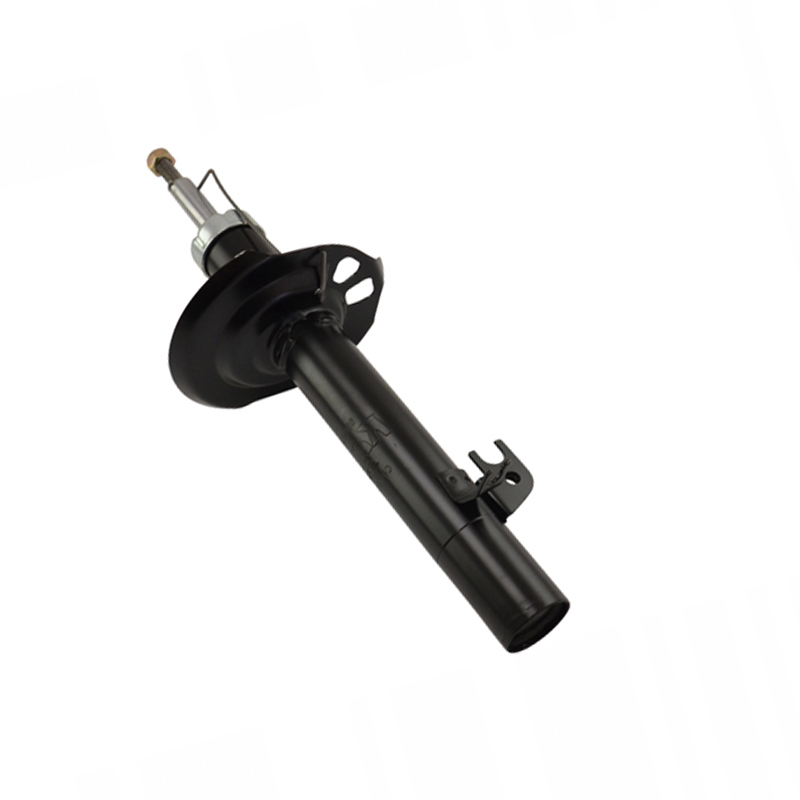
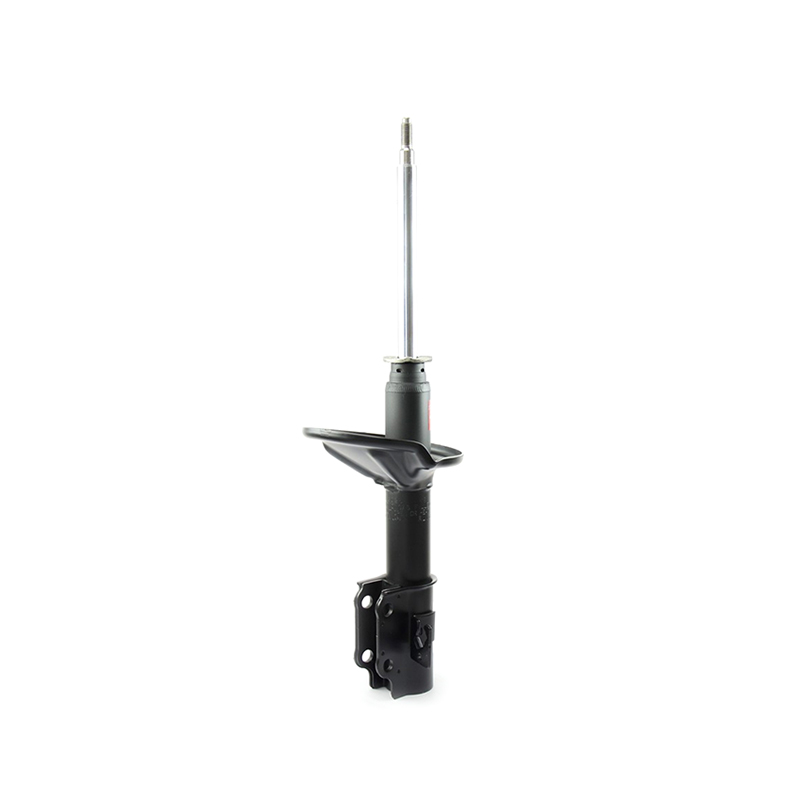
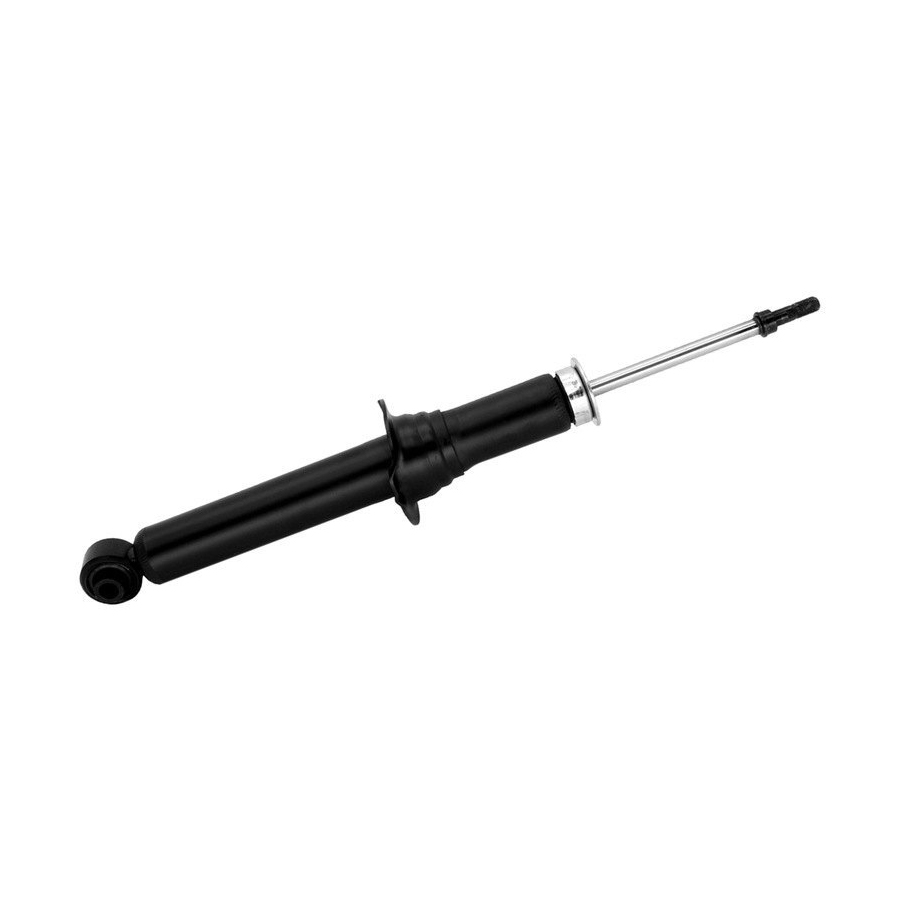
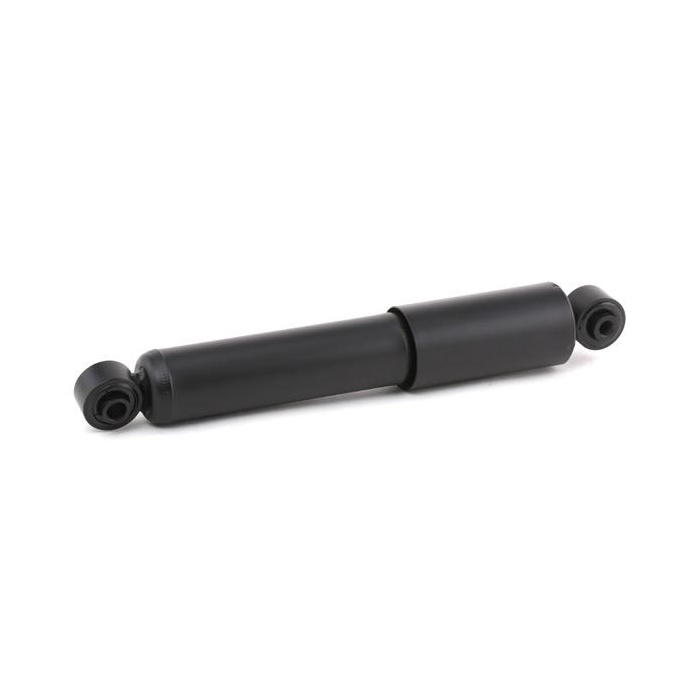
Gerep Automotive Parts Mfg Co., Ltd., Deqing, Zhejiang, manufactures coilover kits and OEM-equivalent shock absorbers for passenger cars, SUVs, off-road vehicles, and commercial trucks. Coilover kits are available for a wide range of passenger car platforms with ride height adjustment, matched spring rates for street and performance applications, and damping tuned for the target use profile. OEM-equivalent shock absorbers and complete strut assemblies available for Toyota, Honda, Volkswagen, BMW, Mercedes-Benz, Ford, Hyundai, Nissan, Subaru, Mitsubishi, Mazda, and many other brands. Products suitable for aftermarket distribution in all major markets. OEM and private label programs available.
Contact us with your vehicle make, model, year, and application requirements (standard replacement, street performance, track, or off-road lift) to receive product recommendations and pricing.
Related Products: Coilover Kits | Strut Assembly | Passenger Car Shock Absorber | Off-Road Damper | Spring Seat
Latest News
-
Bypass Shocks: Internal vs External Explained for Truck and SUV Owners
When your vehicle’s suspension starts feeling floaty or bottoms out over bumps, the term “bypass sh...2026-09-17
-
4x4 Shock Absorbers: Choosing, Replacing, and Upgrading for Off-Road SUVs
Your 4x4 feels unsettled on gravel, the rear end sways after a bump, and the tyres are wearing fast...2026-09-11
-
Shock Absorber Replacement Cost: Average Prices and Expert Labor Guide
Your service advisor hands you an estimate for replacing two rear shock absorbers: $680 for parts, ...2026-09-04
-
Struts vs Shocks vs Springs: Suspension Parts Explained for Car Owners
Your suspension starts making noise, and the shop says you need a new strut. You ask whether that i...2026-08-28
-
Shocks vs Struts: What's the Difference and How to Choose the Right Suspension Part
When one repair shop says your car needs a strut and another says it needs a shock absorber, the tw...2026-08-21
-
Coilovers vs Struts: Key Differences, Ride Quality, and How to Choose the Right Setup
The Short Answer Standing in front of two suspension parts that look almost identical, it is easy t...2026-08-14
Quick Links
Contact Us
-
 +86-13757453333
 -
 +86-572-8355557
 -
 Caroline@gerep.cn
 -
 No. 36, South Zhenxing Rd., Zhongguan Town, Deqing County, Huzhou, Zhejiang, China
Please Enter Your Information
Copyright © Gerep Automotive Parts Mfg Co., Ltd. All Rights Reserved.
Custom Variable Durable Shock Absorbers Manufacturers
