 EN
 English
 Español


News
 Home / Blogs / Industry News / The Role of Shock Absorbers in Vehicle Safety: Braking, Grip and Load Control
The Role of Shock Absorbers in Vehicle Safety: Braking, Grip and Load Control
 2026.11.11
 Industry News
A shock absorber is not a comfort feature. It is the component that decides whether the tyres keep pressing on the road while the driver brakes, steers and swerves, and a worn set quietly removes metres of stopping distance at the moment those metres matter most.
1,900 compression cycles per mile at highway speed
2-4 m extra stopping distance from 100 km/h with worn dampers
30% damping loss that still passes a manual bounce test
Damper manufacturers' track testing repeats the same result. Shock absorbers that have lost roughly a third of their force add two to four metres to a 100 km/h emergency stop, and a wheel whose damper has failed can lose contact with the asphalt ten to twelve times per second on a broken surface. On a 1.5-tonne car, lost contact means lost braking, lost steering and lost electronic stability control authority.
What a Shock Absorber Actually Controls in the Safety Chain
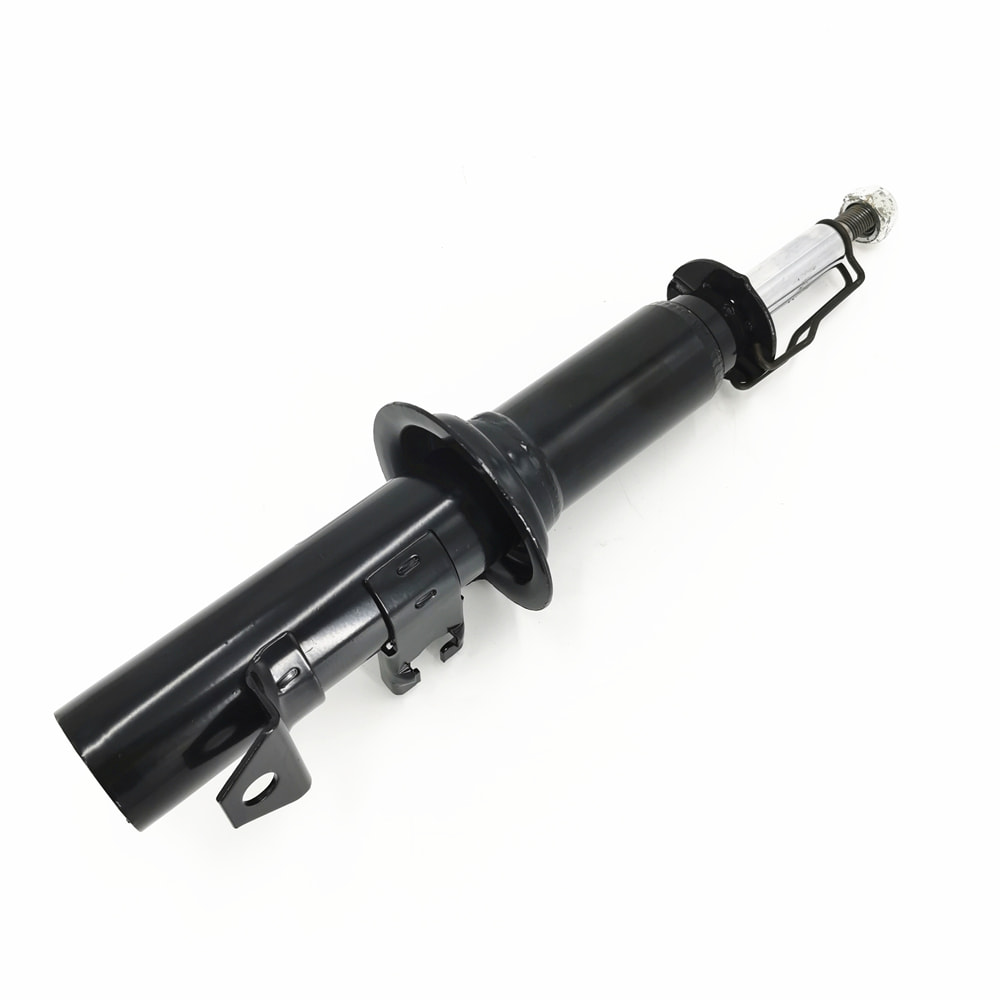
A shock absorber converts the kinetic energy of suspension movement into heat, so the spring cannot keep bouncing the wheel off the road. Springs store energy when they compress; the damper is what removes it, forcing hydraulic oil through calibrated valves on every compression and rebound stroke.
Definition
Shock absorber, also called a damper: a hydraulic cylinder that resists suspension movement by pushing oil through valve orifices. That resistance, called damping force and measured in newtons at a defined piston speed, is the only mechanism that stops spring energy from turning into uncontrolled wheel hop.
Failures stay invisible for a long time because a vehicle still drives with no effective damping. The damage appears in the systems that depend on tyre contact.
- Braking: a wheel carrying less vertical load locks earlier and generates less peak friction, so the force the caliper applies never reaches the road.
- Cornering and evasive manoeuvres: load transfer becomes abrupt when damping is gone, and the outside front tyre loses grip before the driver expects it.
- ABS and electronic stability control: both systems modulate brake pressure at a wheel that stays loaded, and a hopping wheel defeats that assumption.
- Load control: on a loaded vehicle, worn dampers let the rear axle travel through corners, changing steering geometry with every bump.
A road test at 30 to 40 km/h over a washboard surface tells more about damping than any static check. Healthy units settle the body within one or two cycles; worn units keep rocking.
How Worn Shock Absorbers Extend Stopping Distance and Reduce Grip
Worn shock absorbers extend braking distance and reduce cornering grip because a skipping wheel cannot hold a stable contact patch. Braking, steering and traction all pass through four contact patches roughly the size of a hand each, and a tyre that is bouncing spends part of every cycle generating no force at all.
Emergency stop from 100 km/h: effect of damping loss
New dampers, dry 38.0 m
30% loss, dry 40.5 m
60% loss, dry 43.5 m
60% loss, wet 52.0 m
Indicative values compiled from damper manufacturer track tests, compact passenger car, ABS and stability control active.
Field measurements on passenger car shock absorbers and light commercial vehicles repeat the pattern: once damping force falls below about 60 percent of specification, wheel-load variation across the axle doubles and brake force delivery becomes erratic. Dry asphalt hides part of the loss because friction is high; wet asphalt exposes it, and hydroplaning risk rises at lower speeds.
| Damping force remaining | Emergency stop from 100 km/h, dry | Wheel-load variation | Tyre and handling outcome |
| 100 percent, reference | 38.0 m | Baseline | Even tread wear, stable body control |
| 70 percent | 40.5 m | About 25 percent higher | Inner-shoulder cupping starts on the drive axle |
| 40 percent | 43.5 m | About 55 percent higher | Flat spots, tyre life cut by 20 to 30 percent |
| Below 25 percent | 45 m and rising | Wheel hop under braking | Defect risk in periodic roadworthiness inspections |
Damper at full force
- Wheel returns to the road within one cycle
- Body roll builds progressively under cornering
- Tread wear stays even across the section
- ABS and ESC cycle on a loaded wheel
Damper at 50 percent force
- Wheel keeps oscillating after the bump
- Load transfer turns abrupt and unpredictable
- Cupping and flat spots on the inner shoulder
- Brake pressure cycling arrives late and unevenly
Field note
Emergency stops show the gap first. A three-metre difference at 100 km/h on dry asphalt is the difference between stopping short of a stationary vehicle and striking it at roughly 25 km/h.
Warning Signs and Checks That Detect a Failing Shock Absorber
Oil leaks, cupped tyres, a rocking body and a floating front end at speed are the reliable warning signs, while a hand-pressure bounce test is not. Fluid loss is the only failure visible without instruments, and by the time oil reaches the damper body the unit has already lost most of its force.
- Inspect the damper body, piston rod and dust boot for oil film, pitting or a torn boot at every service interval.
- Measure ride height at all four corners; a sagging corner usually points to a collapsed spring or a damper that no longer controls travel.
- Drive a known rough section at 30 to 40 km/h and count body oscillations after each bump; more than two means the damping is gone.
- For fleet or warranty decisions, run a damper dynamometer test at 0.1, 0.3 and 0.5 m/s and compare the force curve with specification.
Replacing a single damper on an axle leaves the vehicle with two different damping rates. That asymmetry shows up as a pull under hard braking and uneven tyre temperatures across the same axle.
Age is the most common root cause, ahead of mileage. Oil seals harden, gas charge escapes and valve shims fatigue, so after 80,000 km most units have lost measurable force even when nothing is leaking.
Why Trucks, Road Trains and Off-Road Vehicles Follow Different Rules
On a loaded truck, bus or road train, the shock absorber is part of the load path and the stability system, not a comfort item. A 40-tonne combination braking from 90 km/h needs 60 to 70 metres on dry asphalt, and every metre of that distance depends on the drive and trailer axles staying planted.
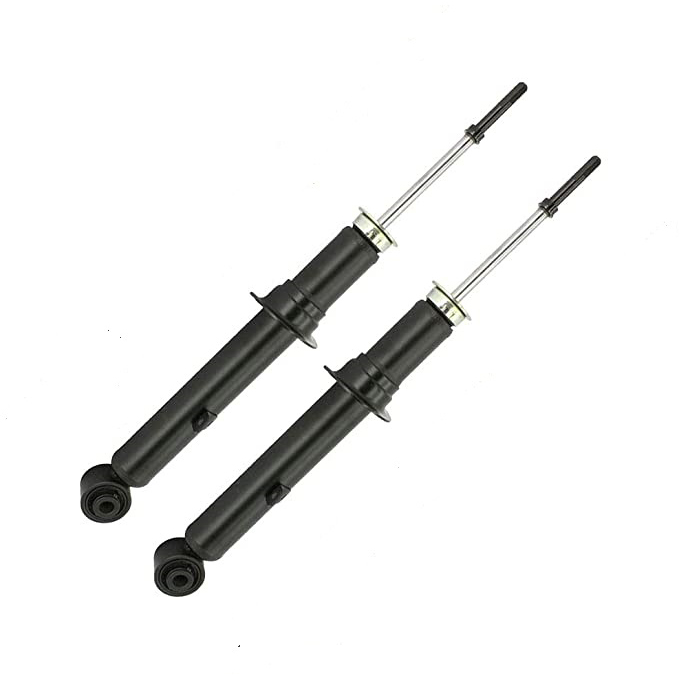
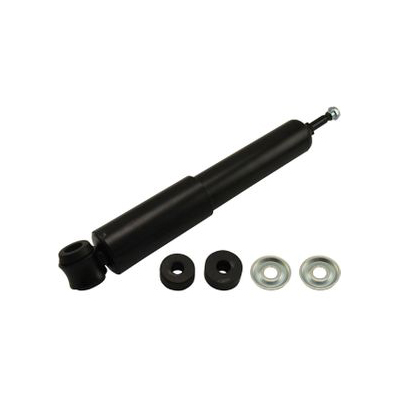
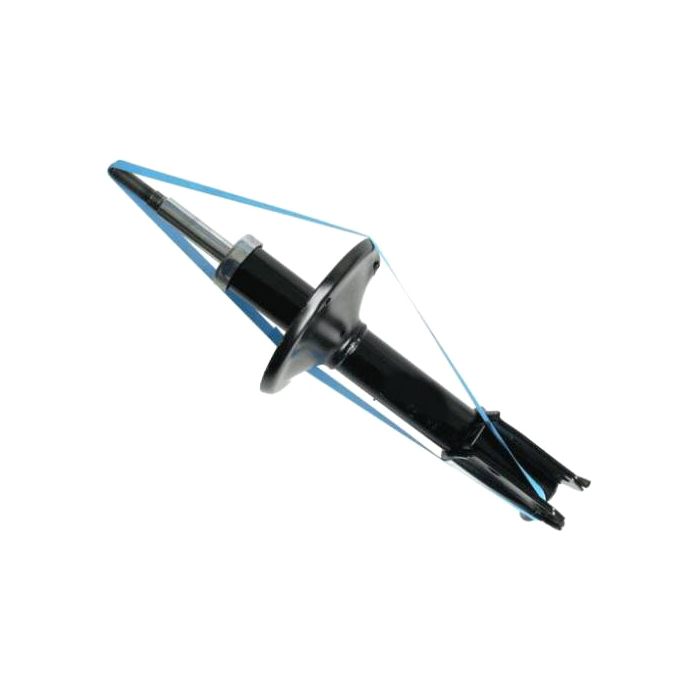 Heavy-Duty Truck Shock Absorbers for Trucks and PickupsBrowse heavy-duty truck shock absorbers by make, model, position, and year, with hydraulic, pneumatic, and air suspension options for varied load and damping needs.View Product →
Duty cycles change the specification. Long-haul trucks run their dampers hot for hours, so oil temperature climbs above 100 degrees Celsius and gas-charged monotube designs hold force better than basic twin-tube units. Road trains on corrugated unsealed roads ask for the opposite trade-off: strong rebound control and generous oil volume to survive continuous high-frequency input without fading.
- Axle hop, not comfort: a truck damper that lets the drive axle hop removes traction exactly when the vehicle needs it.
- Load-dependent damping: heavily loaded trucks need more rebound control to prevent spring surge on expansion joints and bridge decks.
- Heat management: fading is a temperature problem, so oil volume and gas charge matter more than peak force on a bench test.
- Mount and bushing integrity: on rough roads, a failed top mount removes damping faster than any internal wear.
Off-road platforms add another variable. On loose gravel and washboard tracks the stabilising force of an off-road damper has to hold the body while the tyre is already moving, which is why rebound valving and oil capacity are usually specified differently from a road car.
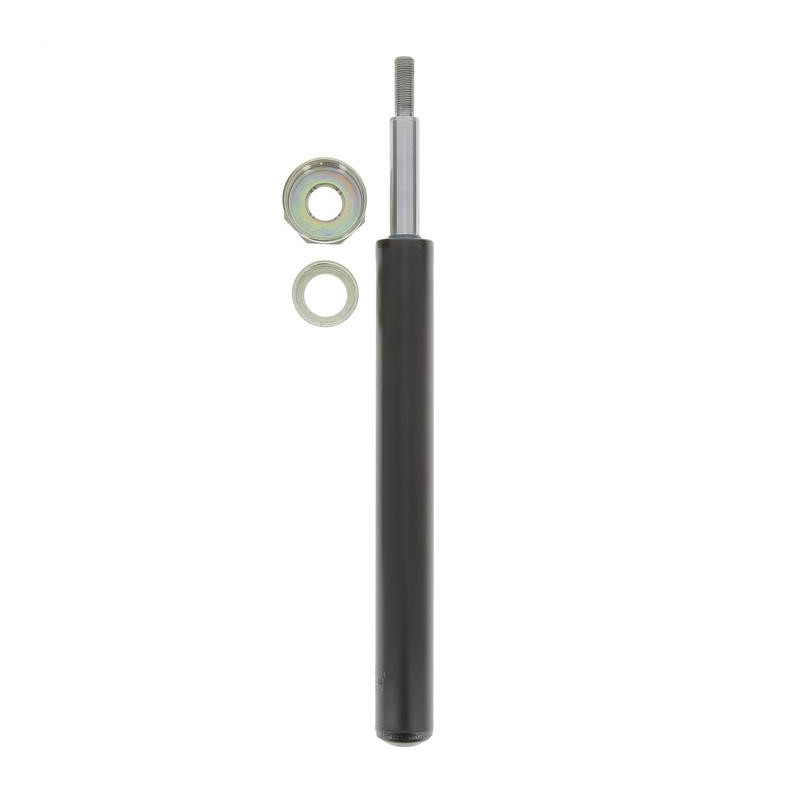
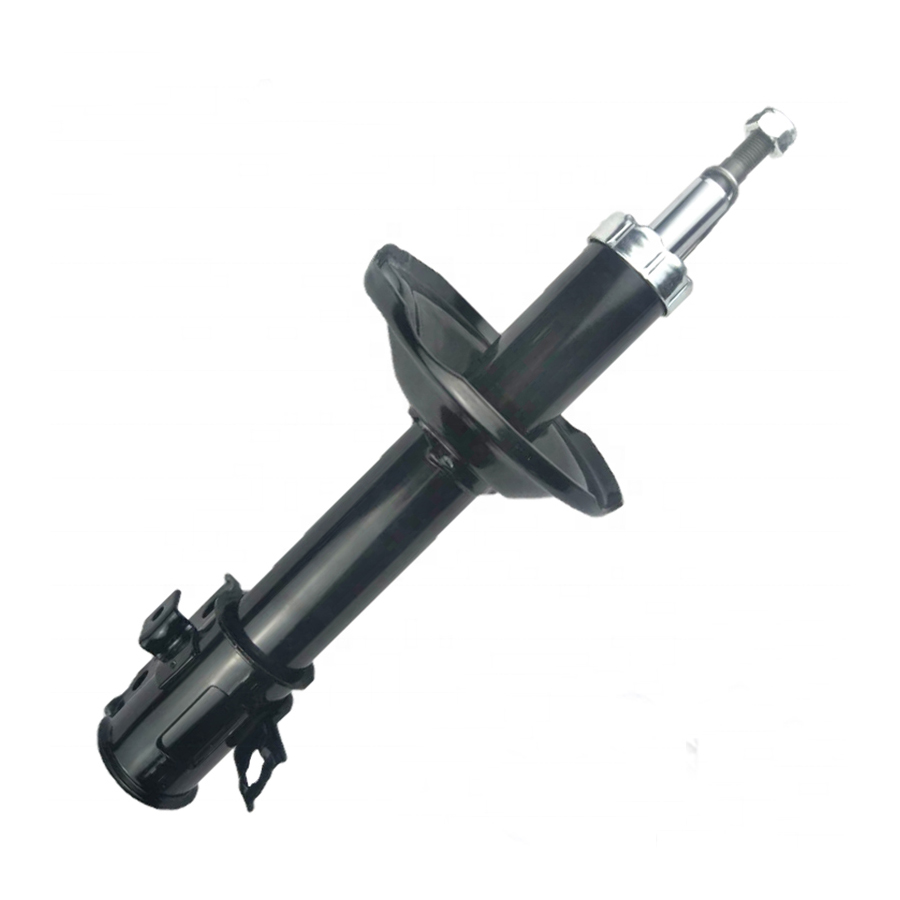 Off-Road Dampers for Front and Rear ApplicationsView off-road dampers for Subaru, Lexus, and Jeep models, with twin-tube, monotube, and reservoir types suited to rough terrain and stability.View Product →
Specification tip for heavy equipment: ask for the damping force curve, not only the extended and compressed lengths. Two dampers with identical dimensions can differ by 40 percent in force at 0.3 m/s.
Specification Checks When Buying Replacement Shock Absorbers
Buying the right replacement shock absorber comes down to matching the damping force curve, the geometry and the seal quality of the original unit, not just the mounting dimensions. A part that bolts on but delivers 60 percent of the original force is a safety downgrade that passes every visual check.
| Specification field | Why it decides the safety outcome |
| Force curve at 0.1, 0.3 and 0.5 m/s | Matching the original curve preserves body control, brake stability and tyre contact at both low and high piston speeds |
| Bore, stroke and mounting geometry | Wrong length or mount offset changes ride height, spring preload and wheel alignment angles |
| Rod diameter and surface finish | A hard-chromed rod resists pitting, which otherwise tears the seal and releases the oil charge |
| Gas charge and oil viscosity index | Keeps force stable when oil temperature rises above 100 degrees Celsius during repeated braking |
| Salt-spray protection | Coastal and winter-road exposure destroys unprotected tubes within two or three seasons |
| Top mount and bushings | Free play in the mount cancels damping force before it ever reaches the chassis |
For distributors and repair chains the deciding factor is usually documentation: force curves per SKU, salt-spray reports and a documented quality system behind the production line. Ask for test data before asking for the price, because a returned batch costs far more than the price difference per unit.
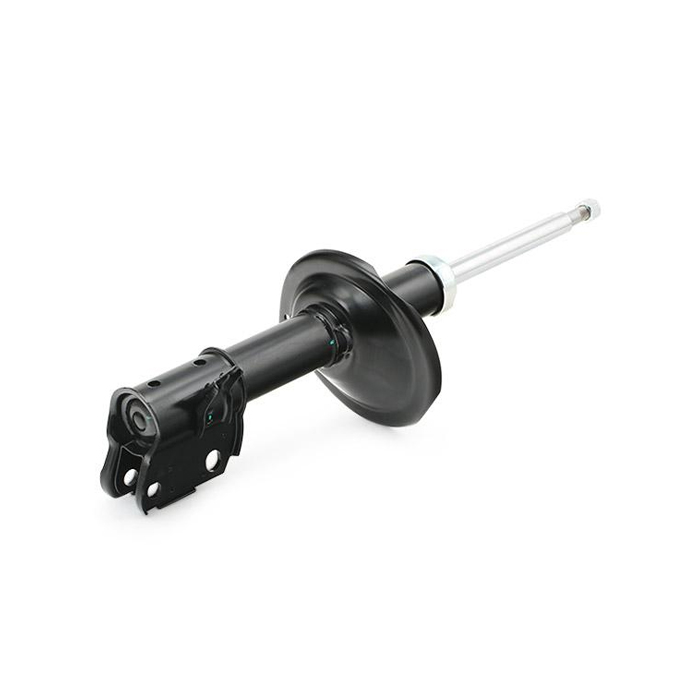 Passenger Car Shock Absorbers for Multiple Vehicle MakesBrowse front and rear passenger car shock absorbers by make and model, with hydraulic, pneumatic, and electronic-controlled types for comfort and handling stability.View Product →
Shock absorbers sit at the point where suspension geometry, tyre grip and electronic safety systems meet. Any vehicle that brakes, steers or carries a load depends on damping force staying within specification for the whole service interval, and measuring it is the only reliable way to know.
Frequently Asked Questions
Do worn shock absorbers really increase braking distance?
Yes. Manufacturer track tests show that dampers which have lost about a third of their force add two to four metres to a 100 km/h emergency stop on dry asphalt, and the gap widens on wet or uneven surfaces because the tyre loses contact more often.
How often should shock absorbers be replaced?
Inspect them every 20,000 km or once a year, and plan replacement between 80,000 and 120,000 km. Vehicles used for towing, heavy loads or frequent unsealed-road driving usually need new dampers earlier, especially once any oil mist appears on the body.
Do shock absorbers have to be replaced in pairs?
Replace both units on the same axle. Mixed damping rates create asymmetric load transfer, which shows up as a pull under hard braking and uneven tyre temperatures, and the newer damper ends up carrying more than its share of the work.
Can a leaking shock absorber fail a roadworthiness inspection?
In many European periodic inspection schemes a damper body covered in oil is logged as a defect and can trigger a re-test, because a leaking unit has already lost gas charge and part of its damping force. Some test lanes also measure damping on a shaker plate.
Latest News
-
The Role of Shock Absorbers in Vehicle Safety: Braking, Grip and Load Control
A shock absorber is not a comfort feature. It is the component that decides whether the tyres keep...2026-11-11
-
Automotive Suspension Systems: New Market Trends Shaping 2026 Buying Decisions
Global automotive suspension systems revenue projections for 2026 range from $52.82 billion to $15...2026-11-04
-
Latest Trends in Automotive Suspension Systems: 2026 Buyer Guide for Distributors
Ask a fleet workshop why a set of dampers came off a vehicle last year and the answer is rarely th...2026-10-28
-
The Future of Automotive Suspension Technology: Hydraulics, Electronics, Energy Recovery
A workshop quoting dampers for a 2012 Land Cruiser and a 2025 electric crossover is quoting two di...2026-10-21
-
Advances in Automotive Shock Absorber Technology: What Changed and What to Buy
A 2026-model electric mid-size SUV carries roughly 350 to 400 kg more sprung mass than the combust...2026-10-14
-
The 140th Canton Fair
Heading to Canton Fair 140th 2026 Source factory of auto spare parts. shock absorber Reliable qualit...2026-10-10
Quick Links
Contact Us
-
 +86-13757453333
-
 +86-572-8355557
-
 Caroline@gerep.cn
-
 No. 36, South Zhenxing Rd., Zhongguan Town, Deqing County, Huzhou, Zhejiang, China
Please Enter Your Information
Copyright © Gerep Automotive Parts Mfg Co., Ltd. All Rights Reserved.
Custom Variable Durable Shock Absorbers Manufacturers
