 EN
 English
 Español


News
 Home / Blogs / Industry News / Global Trends in the Automotive Parts Industry: 2026 Outlook & Sourcing Guide
Global Trends in the Automotive Parts Industry: 2026 Outlook & Sourcing Guide
 2026.11.25
 Industry News
Consider a ride-control distributor in Rotterdam who reviewed his 2025 sales by model year. One pattern stood out: orders for shock absorbers fitted to 1998-2012 sedans and SUVs had grown by double digits year over year, while orders for current-generation models stayed flat. He is not an outlier. Global trends in the automotive parts industry have shifted decisively toward the existing vehicle parc, and the numbers confirm it. Business Research Insights projects the global auto parts market at USD 2.59 trillion in 2026, expanding to USD 3.59 trillion by 2035 at a 3.7% CAGR. Fortune Business Insights puts the automotive aftermarket alone at USD 457.08 billion in 2026 and expects it to reach USD 604.57 billion by 2034.
The larger figure includes original-equipment supply for assembly lines; the smaller one covers replacement parts sold after the initial sale. For a manufacturer such as Gerep Automotive Parts Mfg Co., Ltd., a Chinese ride-control maker with catalog coverage across more than twenty vehicle brands, the aftermarket layer is the operational reality. The trends below explain how distributors and importers decide which part numbers to stock next season.
Global Trends in the Automotive Parts Industry: The 2026 Market Split
Replacement-parts revenue is now structurally independent of new-vehicle assembly because vehicles stay in service longer and accumulate more kilometers in the second half of their life. A passenger car typically survives twelve to fifteen years before scrappage, consuming brake discs, shock absorbers, springs, control arms, and mounting components in a repeating cycle. The replacement wave peaks not in the first five years, which belong to OEM servicing, but in years six through twelve, when the vehicle enters the independent aftermarket.
USD 2.59TGlobal auto parts market, 2026Business Research Insights
3.7%Market CAGR, 2026-2035Business Research Insights
USD 604.6BAftermarket by 2034Fortune Business Insights
The two data sets are complementary. The first covers the entire parts ecosystem including OEM contracts; the second isolates the aftermarket layer where transactions are smaller but order frequency is far higher. Buyers who miss the OEM/aftermarket split project parts demand from new-vehicle sales and then understock the models that dominate repair bay traffic.
| Region | Average vehicle age | Primary replacement driver | 2026-2034 growth profile |
| North America | 12.6 years | Mileage and salt corrosion on trucks and SUVs | Steady growth; distributors hold larger inventory buffers |
| Europe | 12.5 years | Aging fleet plus safety inspections | Moderate growth; OE-quality bias, brand-sensitive demand |
| Asia-Pacific | 6-9 years | Expanding parc plus commercial fleet use | Volume-led growth; price-sensitive ordering |
| Latin America | 9-11 years | Imported used vehicles, rough roads | Volatile but resilient replacement cycles |
The aftermarket is the cyclically stable revenue layer of the automotive parts industry, and it rewards suppliers who hold deep inventory for older models instead of chasing assembly-line contracts.
Global Parts Demand Shifts as Electrification Advances
Electrification changes which components fail first, but it does not shrink total parts demand; it shifts volume from brakes and exhausts toward suspension, tires, and thermal management. Battery-electric sedans are 20-30% heavier than internal-combustion equivalents, and that added mass increases loading on shock absorbers, springs, top mounts, and bushings. Regenerative braking extends friction brake life, so the classic high-frequency wear categories are changing.
PwC's 2026 automotive industry outlook describes stalled battery-electric adoption and rising hybrid sales, meaning both powertrain types will share the parc for years. The practical result for buyers is a dual inventory strategy, covering the internal-combustion fleet and the electrified parc at the same time.
- EV curb weights add 200-400 kg of vertical load per corner, accelerating seal and bushing wear.
- Regenerative braking lengthens pad and disc life by up to 60% in urban duty.
- Hybrids preserve traditional replacement cycles for radiators, exhausts, and engine mounts.
The vehicle that is hardest on shock absorbers is not necessarily the oldest; it is the heaviest with the shortest service intervals, which is precisely the profile of an electrified delivery van.
Aging Vehicle Parcs Extend Ride Control Parts Demand
The average age of light vehicles on U.S. roads is 12.6 years, and the European Union fleet average is 12.5 years; the older the vehicle, the shorter the interval between shock absorber replacements. A damper that survives the first eight years often starts leaking in year nine as the rod seal deteriorates under salt, heat, and mileage. Owners of a ten-year-old vehicle spend on replacement parts instead of loan payments, and workshops increasingly fit upgraded dampers to restore ride height and handling rather than repeat the same OE specification.
Average age of passenger cars and light vehicles in years, latest available regional data, 2024-2025.
For commercial fleets the logic is similar but more load-intensive. Heavy-truck shock absorbers carry higher weight per unit, and fleet operators replace them on mileage intervals rather than after visible failure, which makes truck parts a predictable inventory line.
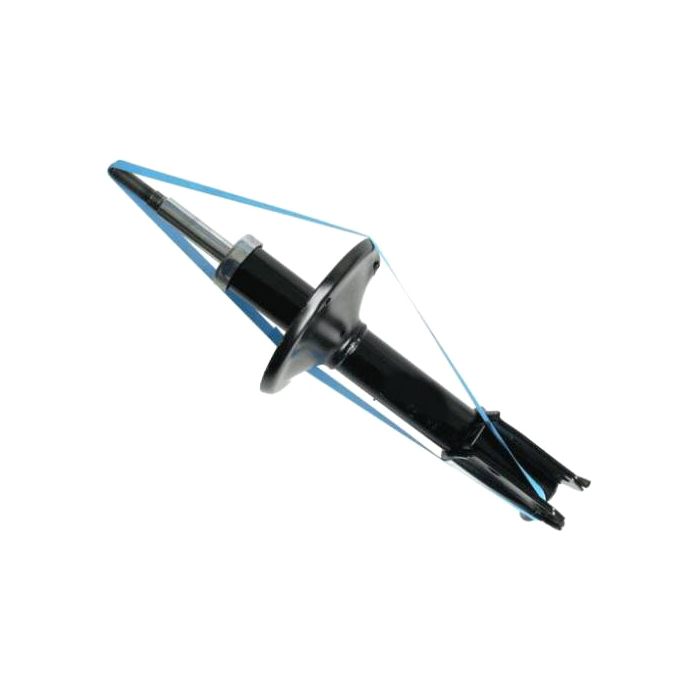 Heavy Duty Truck Shock Absorbers for Mitsubishi and Dacia ModelsThis listing covers shock absorbers for heavy-duty truck applications, including Mitsubishi L200/L300 and Dacia Logan Pickup. It explains hydraulic, pneumatic, and air suspension types, making it useful for fleet maintenance planning.View Product →
Ride control replacement interval: the mileage or time window within which a shock absorber loses more than 50% of its original damping force. For most passenger cars this falls between 60,000 and 100,000 km depending on road conditions and load.
Regionalized Supply Chains Change Global Sourcing Decisions
Global parts buyers are rebalancing supplier selection from lowest unit price toward total landed cost, lead-time reliability, and documented manufacturing capability. During the container-shipping disruptions of 2021-2022, an Asia-sourced parts order that used to arrive in 35 days took 80-120 days, and distributors responded by raising safety stock and splitting orders across regions. Tariffs on Chinese-made components have pushed some buyers toward dual sourcing, yet the economics of the Chinese auto parts manufacturing base remain strong for labor-intensive ride control products.
Traditional sourcing logic
Unit price was the primary decision variable.
- Long lead times accepted as normal
- Minimal safety stock held
- Price renegotiated per container rate
Sourcing logic in 2026
Total landed cost and supply continuity drive decisions.
- Lead-time reliability priced into orders
- Regional safety buffers added
- Documented factory equipment preferred
Total landed cost includes the purchase price, freight, duties, insurance, customs clearance, and the capital cost of holding inventory during the lead time. A component that looks 12% cheaper on the invoice can be 5% more expensive on the shelf if the lead time doubles.
A manufacturer that documents its plant equipment and manufacturing setup on site gives buyers a faster way to verify capability than months of email exchanges.
Ride Control Trends: From OEM Replacement to Upgraded Performance
Ride control has moved beyond same-as-OE replacement. The growth segments in 2026 are performance coilover kits, heavy-duty truck dampers, and off-road dampers engineered for specific vehicle platforms. Workshops increasingly recommend one grade above OE for older sedans because ride comfort deteriorates as springs sag and mounts harden, and coilover kits add adjustability while generating higher margin per unit.
Off-road and SUV owners form a second structural demand pool. Vehicles such as the Jeep Grand Cherokee, Toyota Land Cruiser, and Mitsubishi Pajero stay in service for long periods under harsh operation, and their dampers are replaced with reinforced units that tolerate dust, heat, and repeated articulation. Model-level fitment data is worth more than generic application claims for these platforms.
- Define the operating condition: highway, towing, off-road, or high-load commercial.
- Choose the product tier: OE replacement, heavy-duty, or adjustable coilover.
- Confirm fitment by vehicle brand, model, year, and axle position before ordering.
A coilover kit at three times the price of a standard damper still consumes standard mounts and bump stops, which raises the value of an order without adding inventory complexity for the distributor.
How Importers Should Vet Automotive Parts Suppliers in 2026
In a regionalized market, the best parts supplier is the one whose catalog coverage and manufacturing transparency reduce your inventory risk. Gerep Automotive Parts Mfg Co., Ltd. illustrates the profile importers now screen for: shock absorbers organized by vehicle brand, model, and axle position across passenger cars, heavy-duty trucks, off-road vehicles, and road trains, with separate pages for front and rear fitments. A buyer searching for a Jeep Grand Cherokee front shock absorber lands on a specific product page rather than a generic category listing.
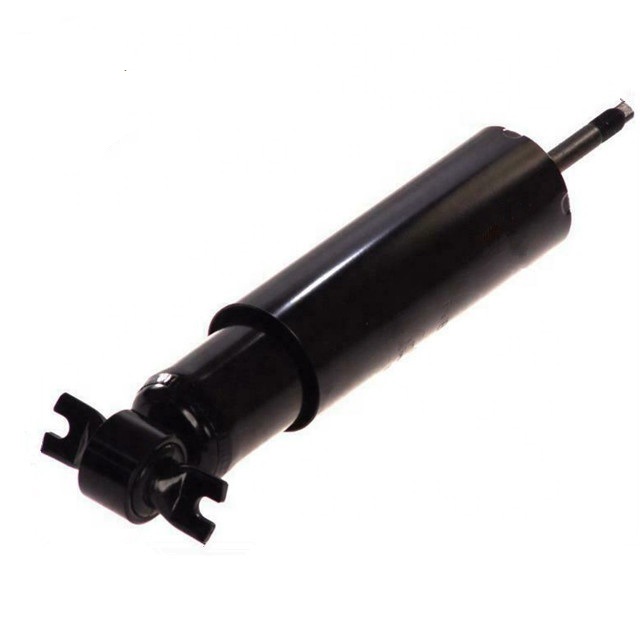 Jeep Grand Cherokee Front Shock Absorber for ZJ GenerationThis product page targets Jeep Grand Cherokee I (ZJ, 1991-1999) front shock absorbers, offering a specific fitment for buyers. It also links related rear shock absorbers for other models, simplifying cross-reference purchasing.View Product →
- Catalog depth: model-level and position-level pages for the vehicles in your local parc.
- Manufacturing proof: published factory and equipment documentation rather than marketing language.
- Communication: a direct channel to a sales engineer, not only a contact form.
- Quality evidence: certificates, test reports, and traceability records.
The parts industry in 2026 rewards precision. Manufacturers that keep old platforms in production while engineering for heavier electrified vehicles will hold the strongest positions; buyers who choose suppliers that document catalogs, factories, and lead times carry the least risk.
Gerep invites buyers to request quotes through its contact page, a practical starting point for checking catalog coverage against the vehicle list in your market.
Automotive Parts Industry Trends: Frequently Asked Questions
What is the projected market size of the automotive parts industry?
Research scopes vary. Business Research Insights projects the global auto parts market at USD 2.59 trillion in 2026, growing to USD 3.59 trillion by 2035 at a 3.7% CAGR. Fortune Business Insights sizes the automotive aftermarket at USD 457.08 billion in 2026, rising to USD 604.57 billion by 2034.
How does electric vehicle adoption affect aftermarket parts demand?
Electrification shifts demand from brake and exhaust components toward suspension, tires, and thermal management parts because battery weight increases chassis load. Hybrid adoption extends traditional replacement cycles for internal-combustion components, so total parts volume per vehicle does not collapse; it changes composition.
Why does average vehicle age matter when planning parts inventory?
Older vehicles consume replacement parts at shorter intervals. With U.S. light vehicles averaging 12.6 years, the EU around 12.5, Japan around 9.1, and China around 6.2, distributors serving mature markets should weight inventory toward suspension and ride control parts for 1998-2015 model years.
What should importers look for in a shock absorber manufacturer?
Evaluate model-level catalog coverage, position-specific application data, documented factory equipment, lead-time track record, and direct access to a sales engineer. In a regionalized supply chain, these factors affect total landed cost more than unit price alone.
Base your next purchase order on parc data, not on the newest model-year launch; the vehicles already on the road decide which part numbers you will sell next season.
Latest News
-
Global Trends in the Automotive Parts Industry: 2026 Outlook & Sourcing Guide
Consider a ride-control distributor in Rotterdam who reviewed his 2025 sales by model year. One pa...2026-11-25
-
New Technologies in Automotive Suspension Parts: What Buyers Should Know
A 2016 SUV rolls into a workshop with a leaking rear damper. The parts counter looks up one corner...2026-11-18
-
The Role of Shock Absorbers in Vehicle Safety: Braking, Grip and Load Control
A shock absorber is not a comfort feature. It is the component that decides whether the tyres keep...2026-11-11
-
Automotive Suspension Systems: New Market Trends Shaping 2026 Buying Decisions
Global automotive suspension systems revenue projections for 2026 range from $52.82 billion to $15...2026-11-04
-
Latest Trends in Automotive Suspension Systems: 2026 Buyer Guide for Distributors
Ask a fleet workshop why a set of dampers came off a vehicle last year and the answer is rarely th...2026-10-28
-
The Future of Automotive Suspension Technology: Hydraulics, Electronics, Energy Recovery
A workshop quoting dampers for a 2012 Land Cruiser and a 2025 electric crossover is quoting two di...2026-10-21
Quick Links
Contact Us
-
 +86-13757453333
-
 +86-572-8355557
-
 Caroline@gerep.cn
-
 No. 36, South Zhenxing Rd., Zhongguan Town, Deqing County, Huzhou, Zhejiang, China
Please Enter Your Information
Copyright © Gerep Automotive Parts Mfg Co., Ltd. All Rights Reserved.
Custom Variable Durable Shock Absorbers Manufacturers
