 EN
EN  English
 Español

News
 Home / Blogs / Industry News / How Shock Absorbers Improve Vehicle Performance: Damping, Braking & More
 How Shock Absorbers Improve Vehicle Performance: Damping, Braking & More
 2026.09.22
 Industry News
At 96 km/h, a family sedan with worn shock absorbers can need roughly six more metres of road to stop than the same car with fresh dampers. Shock absorbers improve vehicle performance by converting vertical suspension energy into heat instead of letting it bounce the tyre off the road, and that single function changes braking distance, cornering grip, tyre life, and driver confidence. This article explains the damping physics behind that improvement, the test data that quantifies it, and the specification choices that determine how much performance a vehicle actually recovers.
How Shock Absorbers Improve Vehicle Performance Through Damping
Shock absorbers improve vehicle performance by applying controlled hydraulic resistance to compression and rebound movement, which stops the spring oscillating freely and holds the tyre to the road.
The spring stores energy; it cannot remove it. When a wheel hits a bump, the spring compresses and then releases that energy, and without a damper it keeps bouncing at its natural frequency. The shock absorber dissipates that energy as heat: hydraulic oil is forced through calibrated valve stacks, and the resistance of that oil flow is what stops the bounce.
DampingDamping is the controlled dissipation of suspension energy: a shock absorber converts the kinetic energy of spring motion into heat through oil flow, so the wheel returns to its ride position quickly without overshoot.
Two valve groups do the work. Compression valving controls the damper shortening as the wheel moves up; rebound valving controls extension as the wheel moves down. Street dampers typically generate rebound forces 1.5 to 2.5 times higher than compression forces, because the spring assists compression while rebound must be handled by the damper alone.
The performance effect shows at the tyre contact patch: every 25 mm of uncontrolled wheel travel is a section of tyre not producing braking or cornering force.
How Shock Absorbers Improve Vehicle Performance in Braking and Cornering
Independent industry tests have measured stopping-distance increases of up to 6.4 metres from 96 km/h when shock absorbers are worn, roughly 5 percent of a passenger car's total braking distance.
6.4 mextra stopping distance at highway speed with worn dampers
50%of original damping force gone after 80,000 km
11%tyre life reduction linked to uncontrolled wheel oscillation
0.24 sreaction time effectively lost in a 96-0 km/h stop
The mechanism is wheel hop. At highway speed a wheel with a weak damper oscillates at roughly 15 to 25 Hz, and every time it unloads, the contact patch shrinks and grip drops. Emergency braking makes it worse, because weight transfer compresses the front springs and the rebound stroke decides whether the tyre stays loaded through the whole stop.
Damping force retained vs mileage
Illustrative decay curve based on endurance testing of hydraulic twin-tube shock absorbers.
That extra 6.4 metres is about three pedestrian steps. At 27 metres per second, it equals 0.24 seconds of reaction time, time the driver has usually already used before the brake pedal reaches the floor.
6.4 mdocumented braking-distance penalty of worn shock absorbers at highway speed
Tyre wear follows the same physics: uncontrolled oscillation causes cupped edge wear, and fleet measurements link worn dampers to tyre life reductions of around 11 percent.
Valving and Damping Curves: What Defines Performance
A shock absorber's performance is set by its damping curve, the relationship between piston speed and the force it generates; two identical-looking dampers can behave completely differently based on shim-stack configuration and gas pressure.
Valve tuning is split by piston speed. At 0.05 to 0.3 metres per second, the damper controls body roll, brake dive, and long undulations; above 0.5 metres per second, extra ports open so a sharp bump does not spike force into the chassis. That split is what allows both a comfortable highway ride and a stable emergency stop from one unit.
Valving ruleFirm low-speed damping produces crisp body control; firm high-speed damping mostly adds ride harshness without more grip. The two should be tuned separately, and a city-car replacement should not carry off-road high-speed valving.
Gas pressure matters as well: a twin-tube damper pressurised with nitrogen to 10-25 bar suppresses oil aeration when the piston changes direction, and aeration is the first cause of damping fade after hard use.
| Tuning target | Low-speed force | High-speed force | Rebound/compression | Best suited for |
| OE comfort | Moderate | Soft | 1.5:1 | Daily driving, badly surfaced city roads |
| Sport handling | High | Moderate | 2.0:1 | Cornering precision, taut body control |
| Heavy-duty / off-road | Very high | Firm | 1.8:1 | GVW loads, rough terrain, long heat cycles |
The lesson: mounting points can be identical while internal tuning decides whether the vehicle rides like a comfort sedan or a load-carrying workhorse.
Six Signs That Worn Shocks Are Costing Performance
Worn shock absorbers degrade performance gradually, so drivers adapt to the loss instead of noticing it. The first reliable clues are longer braking, a bobbing rear on motorway undulations, and odd tyre wear with no alignment cause.
- Nose dive deepens under braking because the front damper cannot control compression weight transfer.
- Rear squat on acceleration makes the vehicle feel lazy and can trigger traction control earlier.
- The body keeps oscillating two or three times after a bump instead of settling in one cycle.
- Steering feels floaty at highway speed and the car drifts on crowned roads.
- Tyres develop cupped edge wear, typically in a diagonal pattern across the four wheels.
- Braking distances feel longer in the wet even when pads and tyres are new.
Healthy damper
- Contact patch stays loaded under braking
- Body settles in one controlled cycle
- Stable braking attitude, minimal dive
- Even tyre wear without cupping
Worn damper
- Wheel hop reduces available grip
- Body keeps oscillating after bumps
- Nose dives while the rear unloads
- Cupped edges appear on outer shoulders
OEM guidance typically puts the first inspection at 50,000 km and replacement at 80,000 to 100,000 km for passenger vehicles; trucks near gross vehicle weight reach that threshold earlier because heat breaks down valve oil faster.
Replacement ruleIf a damper leaks oil, has a bent rod, or takes more than two oscillations to settle after a bump, it is already reducing braking and grip performance. Replace the same axle in pairs.
How to Match Shock Absorbers to Real Driving Conditions
The right shock absorber is the one matched to the vehicle's dominant load: unladen ride comfort for passenger cars, GVW-rated damping for trucks, and long-travel low-speed control for off-road work.
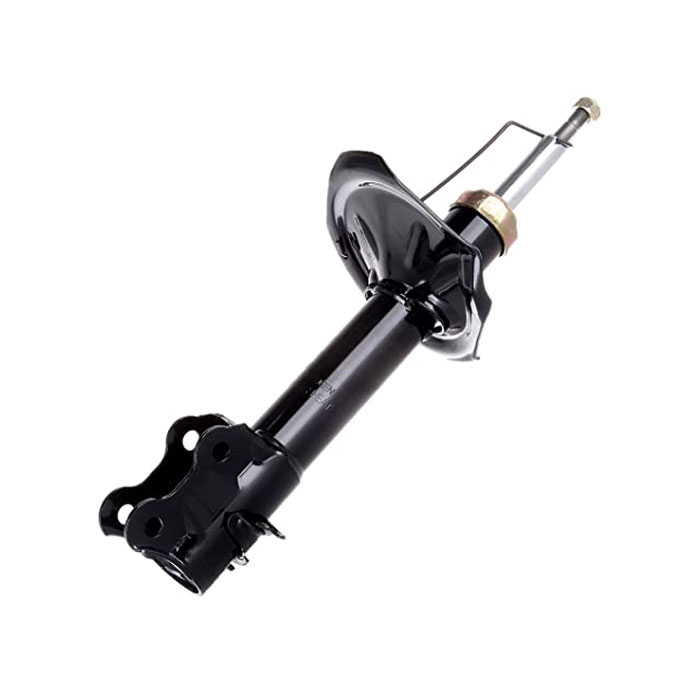
Passenger-car tuning starts from ride frequency, typically 1.0 to 1.5 Hz on comfort models. Rebound valving must control that frequency without exciting a sympathetic vibration in the seat or steering column. A front strut, for example, integrates the damper with the spring seat and wheel-bearing mounting, so the complete assembly has to match the original dimensions.
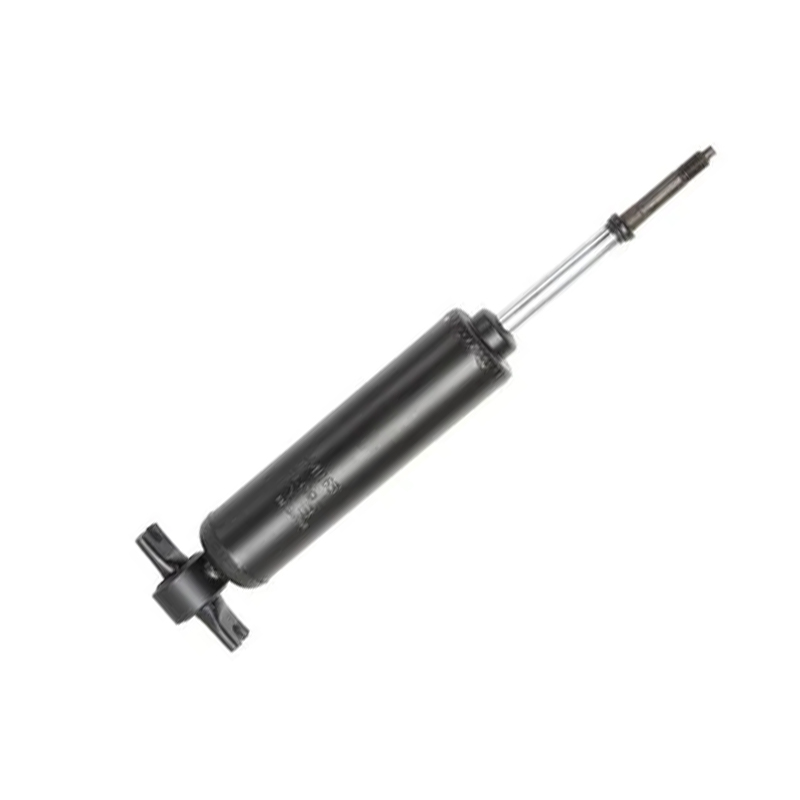
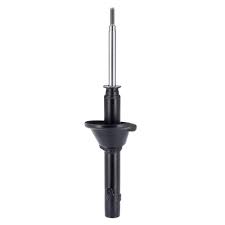 Honda Civic Front Shock Absorber for 1972-1983 Hatchback and SaloonThis front damper matches the original dimensions of early Civic models, supporting the ride-frequency and rebound valving needs described for passenger-car struts.View Product →
Trucks run long periods near gross vehicle weight, so their dampers must shed continuous heat without fade. Valving moves toward higher force at moderate piston speeds and oil volume grows. Brake dive on a loaded truck unloads the rear axle, lengthens stopping distance, and accelerates driveline wear.
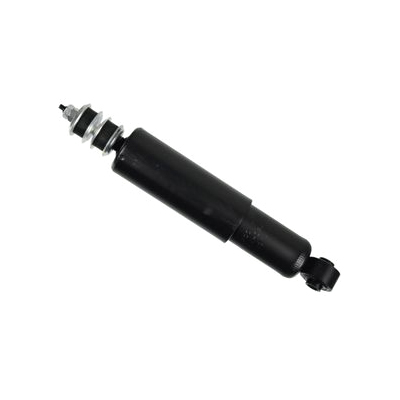 Hyundai H100/Porter Front Shock Absorber for 1993-Onward ModelsBuilt for trucks that run heavy and hot, this front unit addresses the continuous heat and brake-dive demands outlined for dampers on loaded commercial vehicles.View Product →
Off-road dampers prioritise low-speed compression control so the vehicle can crawl over rocks and ruts without the suspension packing down; the rebound side keeps the tyre planted when the vehicle drops off a ledge. A highway damper is the wrong tool for that stroke profile.
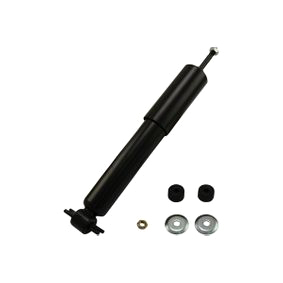 Mitsubishi Pajero Front Shock Absorber for 1982-1991 Pajero IThis front damper suits the off-road compression and rebound stroke profile discussed for crawling and ledge drops, fitting the early Pajero generation.View Product →
Model-specific coverage is what separates a parts list from an engineering solution. Gerep Automotive Parts Mfg Co., Ltd. (gerep-auto.com) builds passenger-car, heavy-duty-truck, and off-road dampers with SKUs mapped to brand, model, and front or rear position, and its factory page documents the production equipment behind that coverage. For a useful follow-up, its technical article on driving stability and handling explains how passenger-car dampers translate into road behaviour.
Buying principleVerify damping force values against the application, confirm oil volume for thermal duty, and check shaft diameter, hook dimensions, and extended length against the original part before ordering.
Frequently Asked Questions
How do shock absorbers improve braking performance?
Shock absorbers keep the tyre contact patch loaded during weight transfer. Under braking, weight moves forward; without enough damping force, the front spring compresses and rebounds, the wheel hops, and grip drops. Tests have measured up to 6.4 metres of extra 96-0 km/h stopping distance with worn dampers.
How often should shock absorbers be replaced?
Most OEM schedules recommend inspection from 50,000 km and replacement between 80,000 and 100,000 km for passenger vehicles. Trucks near GVW and off-road vehicles need earlier replacement because heat degrades oil and valve performance. Replace them on the same axle in pairs.
What is the difference between a shock absorber and a strut?
A shock absorber is a damping device. A strut is a structural suspension component that includes the damper cartridge, a spring seat, and the mounting points that locate the wheel. Struts transmit suspension and steering loads into the body, so fit precision and tightening torque matter more than with a separate damper.
Do stiffer shock absorbers always improve handling?
No. Stiffer damping raises cornering response only if the springs and tyres can use it. Overshooting the damping ratio makes the tyre skitter over bumps and can increase stopping distance on rough pavement. The goal is damping matched to spring rate, tyre stiffness, and vehicle mass, not maximum stiffness.
Latest News
-
How Shock Absorbers Improve Vehicle Performance: Damping, Braking & More
At 96 km/h, a family sedan with worn shock absorbers can need roughly six more metres of road to s...2026-09-22
-
Bypass Shocks: Internal vs External Explained for Truck and SUV Owners
When your vehicle’s suspension starts feeling floaty or bottoms out over bumps, the term “bypass sh...2026-09-17
-
4x4 Shock Absorbers: Choosing, Replacing, and Upgrading for Off-Road SUVs
Your 4x4 feels unsettled on gravel, the rear end sways after a bump, and the tyres are wearing fast...2026-09-11
-
Shock Absorber Replacement Cost: Average Prices and Expert Labor Guide
Your service advisor hands you an estimate for replacing two rear shock absorbers: $680 for parts, ...2026-09-04
-
Struts vs Shocks vs Springs: Suspension Parts Explained for Car Owners
Your suspension starts making noise, and the shop says you need a new strut. You ask whether that i...2026-08-28
-
Shocks vs Struts: What's the Difference and How to Choose the Right Suspension Part
When one repair shop says your car needs a strut and another says it needs a shock absorber, the tw...2026-08-21
Quick Links
Contact Us
-
 +86-13757453333
 -
 +86-572-8355557
 -
 Caroline@gerep.cn
 -
 No. 36, South Zhenxing Rd., Zhongguan Town, Deqing County, Huzhou, Zhejiang, China
Please Enter Your Information
Copyright © Gerep Automotive Parts Mfg Co., Ltd. All Rights Reserved.
Custom Variable Durable Shock Absorbers Manufacturers
