 EN
EN  English
 Español

News
 Home / Blogs / Industry News / Innovations Driving the Automotive Suspension Market: What Buyers Need
 Innovations Driving the Automotive Suspension Market: What Buyers Need
 2026.09.30
 Industry News
Replacing a shock absorber on a 2024 battery-electric sedan is not the same job it was five years ago. The extra 300 to 400 kg of battery pack, the lower center of gravity, and the stiffer tire sidewalls all change what the damper has to control. These mechanical realities are exactly why the innovations driving the automotive suspension market matter to anyone who buys parts professionally, not just to OEM chassis engineers.
The market is expanding because a damper is no longer a sealed oil tube clipped to a coil spring. It is a calibrated component that must match vehicle mass, electronic control logic, and a specific duty cycle. Aggregated industry estimates put the market at roughly $70 billion in 2025, growing near 5.5 percent annually through 2030.
A working definition for buyers: the innovations driving the automotive suspension market are any design or manufacturing change that improves how a damper manages mass, motion, and thermal load on a specific vehicle.
Innovations Driving the Automotive Suspension Market, Measured by Segment
Passive dampers still dominate volume, but adaptive systems dominate growth.
The 2025 revenue pool splits into four system types. Passive hydraulic dampers remain the largest share because more than 60 percent of the global fleet still runs fixed-characteristic units. Semi-active systems, which modulate damping through a solenoid valve, form the main bridge between conventional and intelligent chassis. Active systems and air suspension add the fastest-growing incremental revenue.
Estimated global suspension market revenue by system type, 2025 (USD billion)
Compiled from public market research estimates
$70B2025 global market estimate
5.5%Projected annual growth to 2030
58%Passive system revenue share
Core fact: semi-active and active systems are the fastest-growing segment because they convert a purely mechanical replacement part into a sensor-driven component with measurable ride comfort and safety value.
For a buyer this matters: if your customers run older fleets, standard dampers carry most of the volume; if the fleet is shifting to EVs and premium sedans, valve-controlled dampers will climb in your order pattern within two or three years.
Semi-Active Damping Is Moving from Flagship Options to Normal Replacement Stock
Semi-active dampers are the most commercially important innovation in this cycle because they move the value of a ride-quality system directly into the shock absorber.
A semi-active damper replaces the fixed orifice of a conventional unit with a solenoid-controlled valve. The control module reads body acceleration, steering input, and braking pressure, then changes the valve setting in milliseconds. Since 2023, European and Asian carmakers have been fitting such dampers to midsize sedans and compact SUVs, not only to luxury flagships.
Replacement buyers must check four things before ordering:
- The vehicle uses an electronically controlled damper or a passive unit.
- The exact OE part number and variant, because valve calibration can differ between model years.
- The wiring connector type and control module compatibility.
- Front and rear calibration differences for the same platform.
On a high-volume platform such as the BMW 3 Series, a front damper that matches the original calibration is the difference between a compliant ride and a warning light from a mismatched sensor reading.
Practical rule: if the vehicle has an electronically controlled damper, the replacement damper must carry the factory calibration code. A universal part number that only fits mechanically will not communicate with the chassis control unit.
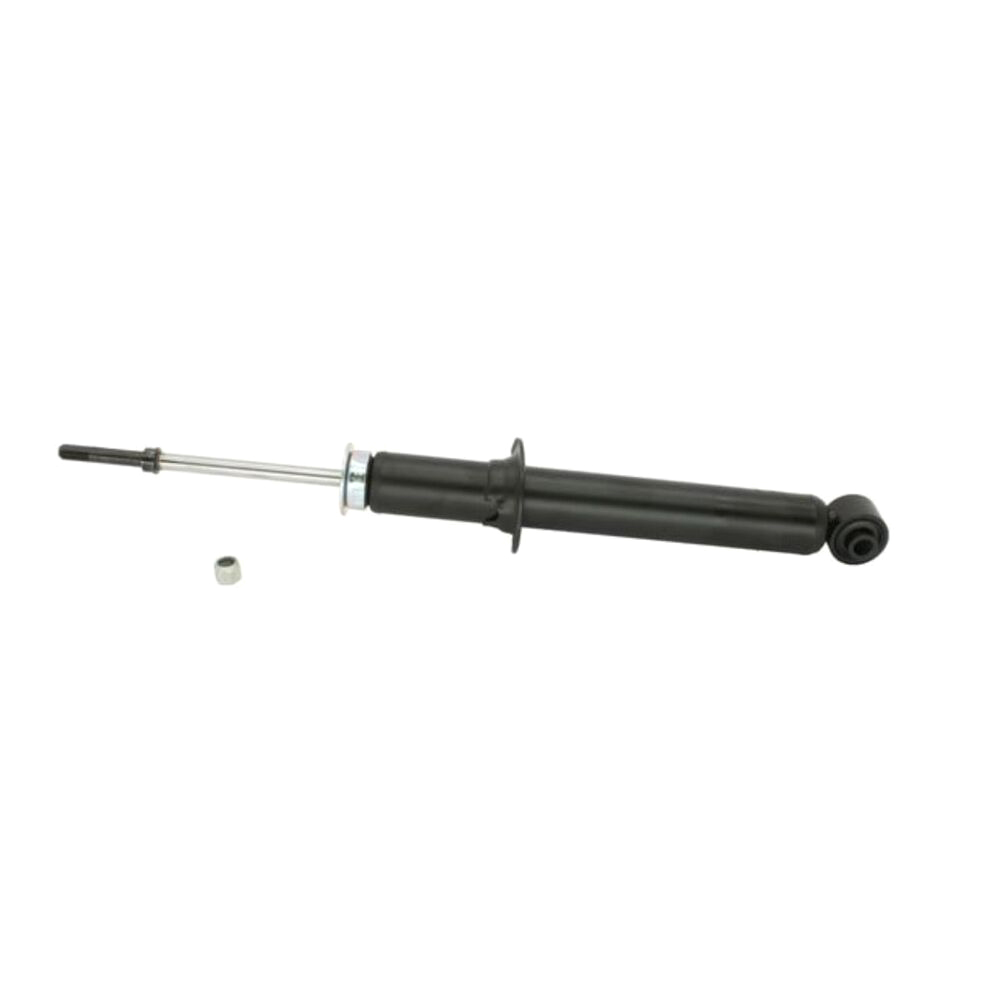
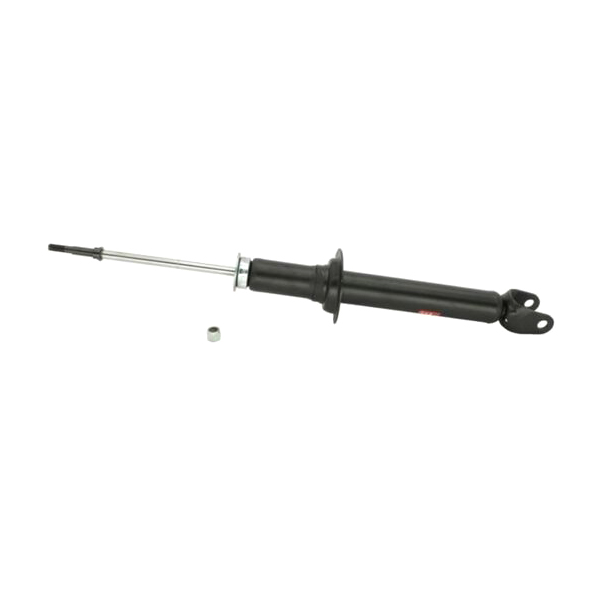
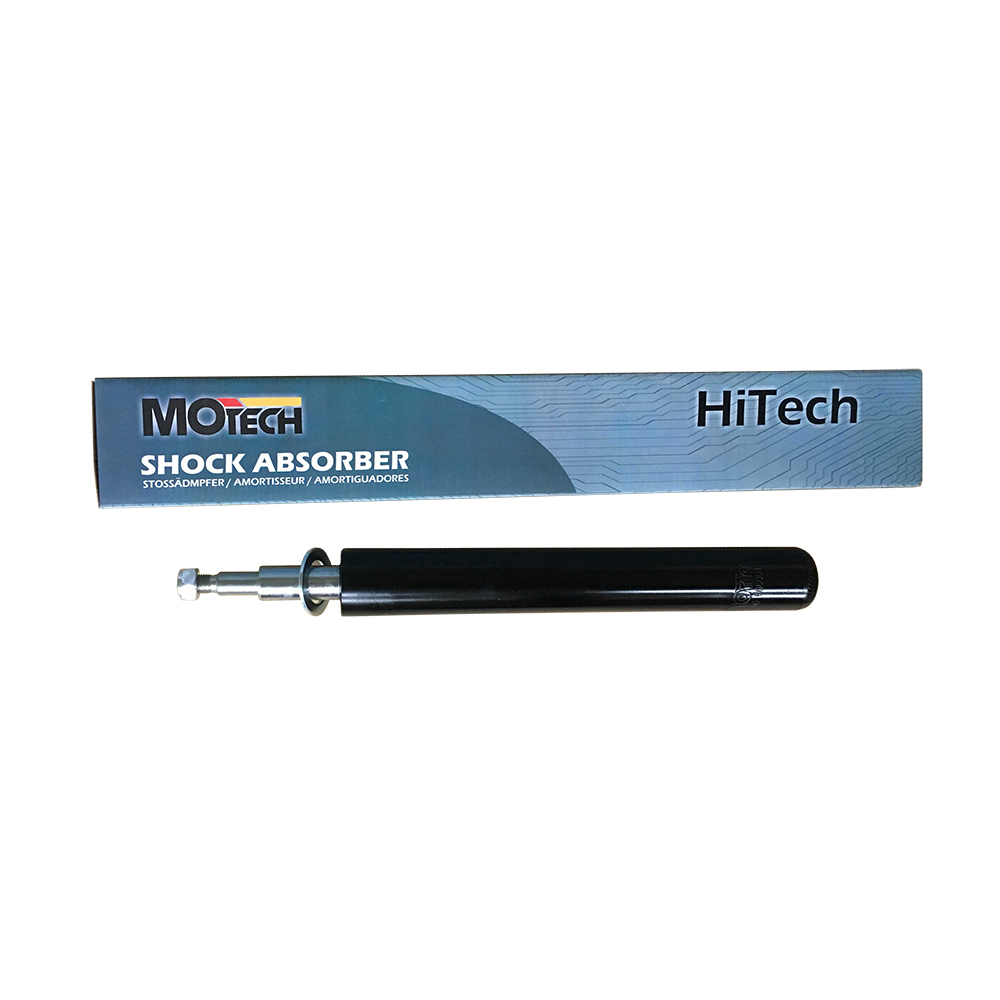 Front Shock Absorber for BMW 3 Series (E21, 1975-1984)This front shock absorber is a direct replacement for the BMW 3 Series E21. It is intended to match the original factory calibration, which is essential for vehicles equipped with electronically controlled dampers.View Product →
EV Battery Mass Is Rewriting the Damping Rulebook
Battery-electric vehicles weigh 20 to 30 percent more than equivalent combustion models, and the added mass changes every parameter that determines how a damper should be tuned.
A typical midsize EV sedan carries 300 to 400 kg of extra battery mass, lowers its center of gravity by around 60 mm, and increases peak axle load well beyond the combustion version. The damper must manage higher bump loads, faster weight transfer under braking, and a shifted ride frequency. In practice, an EV-tuned damper needs a 15 to 20 percent higher damping coefficient than the combustion version.
| Parameter | Combustion sedan | Battery-EV sedan |
| Curb weight | 1,450 kg | 1,850 kg |
| Front-to-rear weight distribution | 58:42 | 52:48 |
| Center of gravity height | 580 mm | 510 mm |
| Relative damping force requirement | Baseline | +15 to 20 percent |
This shift directly affects passenger car shock absorber design. Installing a combustion-spec damper on an EV variant produces poor body control and accelerated seal wear. Distributors need catalog systems that split stock by powertrain type, not only by vehicle model.
Off-Road and Heavy-Duty Dampers Are Built for a More Severe Duty Cycle
Off-road and commercial vehicle dampers are being redesigned around heat management, load variation, and longer service intervals.
An SUV that commutes during the week and runs rough trails on weekends subjects its dampers to two conflicting demands: low-speed articulation with high oil temperature and highway cooling at speed. A properly built off-road damper uses a larger piston, stronger rod seals, and a valve stack tuned for slow wheel travel. Manufacturers that separate the range into passenger, off-road, heavy-duty truck, and road-train dampers make the buyer's job easier because each tune matches a duty cycle.
Long-haul truck and road-train applications extend the same logic: operators measure damper life in hundreds of thousands of kilometers, and internal oil fade is the main cause of early replacement.
Why it matters: heat is the main life limiter in off-road dampers. When internal oil temperature rises, viscosity drops, valve performance drifts, and seal wear accelerates.
On platforms such as the Jeep Cherokee, front and rear dampers are stressed differently off-road, and replacement parts need to match the original travel and valving.
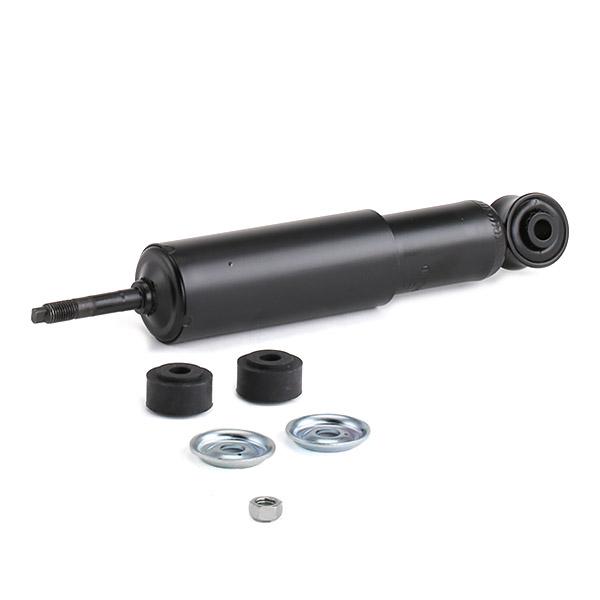
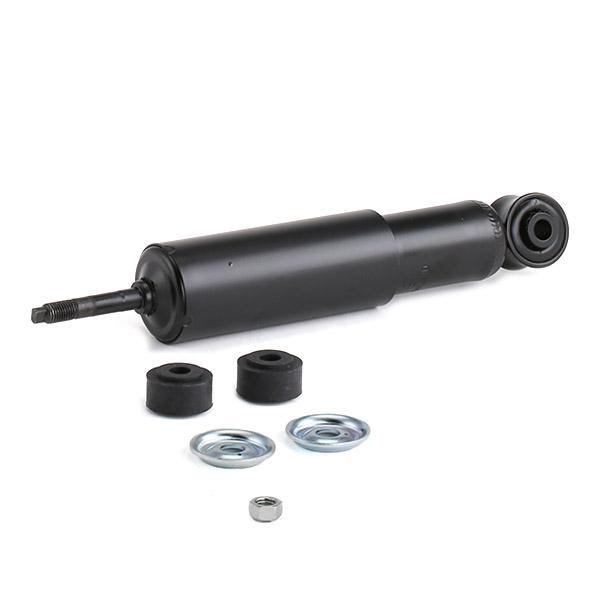
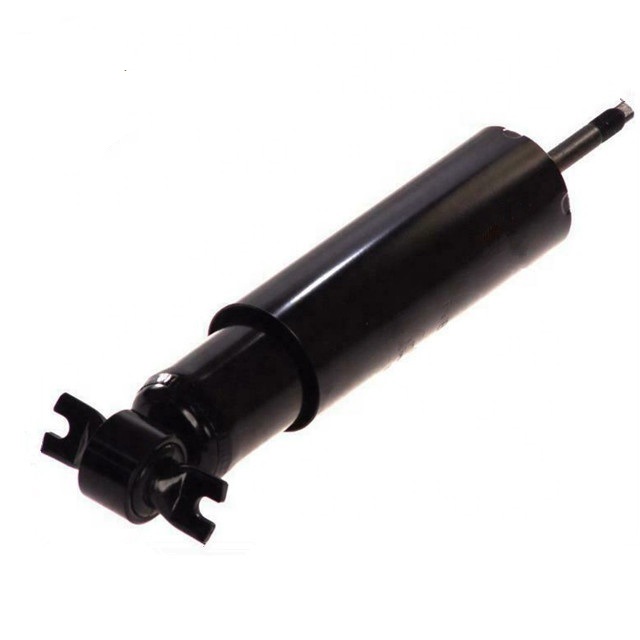 Front Shock Absorber for Jeep Cherokee (XJ, 1983-2001)For the Jeep Cherokee XJ, this front shock absorber is designed to match the original travel and valving. It addresses the different stress levels encountered off-road, helping maintain consistent suspension behavior.View Product →
The Aftermarket Is a Silent Innovation Driver in the Automotive Suspension Market
The most practical innovation in the aftermarket is happening on the factory floor, where replacement dampers are built to match OEM behavior with repeatable precision.
The public story concentrates on sensors and algorithms, but a replacement damper lives or dies by mechanical execution: rod surface finish, seal geometry, oil fill volume, and a valve stack that matches the original damping curve. Gerep Automotive Parts Mfg Co., Ltd., a China-based suspension component manufacturer, illustrates this side of the market. Its catalog is organized by vehicle type (passenger cars, heavy-duty trucks, off-road vehicles, road trains) with front and rear pages per model, so buyers confirm fitment before inquiry.
Before you qualify a supplier, review the plant equipment and process controls. The critical steps are rod grinding, chrome plating, seal assembly, vacuum oil filling, and finished-unit dyno testing.
On the performance side, coilover kits are the fastest-growing customization category because they combine height and damping adjustment in one bolt-in assembly.
Supplier evaluation rule: check three outputs: dimensional accuracy of rod and tube, valve stack conformance to the OE curve, and seal durability against water and dirt. These three determine whether the part performs like the original.
How a Professional Buyer Should Evaluate a Suspension Supplier
Every innovation trend in this market changes one business question: can the supplier deliver the right damper, with the right specification, when a vehicle in the workshop needs it?
The following check applies whether you are sourcing for a repair chain, an off-road specialist, or a fleet maintenance program.
| Capability | What to verify | Why it matters |
| Application coverage | Catalog organized by brand, model, and front/rear position | Reduces fitment errors and saves order processing time. |
| Technology match | Valve curve and connector interface match the OE variant | Prevents warning lights and ride quality complaints. |
| Quality control | In-house seal, oil fill, and finished-unit testing | Field failure cost is far higher than the unit price difference. |
| Production evidence | Documented factory equipment and process transparency | Confirms a manufacturer rather than a middleman. |
| Direct contact | Sales engineer reachable for specification confirmation | Needed for bulk orders and discontinued model coverage. |
Gerep publishes this level of information deliberately. A buyer who checks the catalog, inspects the factory pages, and contacts the sales team before ordering gets a clear picture of whether the supplier makes the part or resells it.
Frequently Asked Questions
What is a semi-active suspension system?
A semi-active suspension system uses a solenoid-controlled valve to adjust hydraulic damping in real time. Sensors feed body acceleration and steering data to a control unit, which changes the valve opening in milliseconds, letting the damper switch between soft and firm without adding energy to the suspension.
Why do electric vehicles need different shock absorbers?
Electric vehicles weigh 20 to 30 percent more than combustion models and sit lower because of the floor-mounted battery. The higher mass and changed center of gravity modify spring loads and wheel frequencies, so an EV-tuned damper needs 15 to 20 percent more damping force than the combustion version.
How often should shock absorbers be replaced?
Standard guidance is 50,000 to 80,000 km for road vehicles, but the real indicators are oil leakage, weak rebound control after a push-down test, and fast tire wear. Heavy-duty and off-road use shortens the interval because higher heat degrades oil and seals faster.
What should a distributor verify before sourcing dampers from overseas?
Verify the manufacturer's real production capability, catalog depth by brand and model, willingness to confirm OE damper specifications, and a direct channel for order confirmation. Factory documentation and a conversation with the sales engineer are the proof.
Direct answer for distributors: the innovations driving the automotive suspension market will not reduce your SKU count. They will increase it, because each technology variant multiplies the number of correctly calibrated dampers a vehicle line needs.
Latest News
-
Innovations Driving the Automotive Suspension Market: What Buyers Need
Replacing a shock absorber on a 2024 battery-electric sedan is not the same job it was five years ...2026-09-30
-
How Shock Absorbers Improve Vehicle Performance: Damping, Braking & More
At 96 km/h, a family sedan with worn shock absorbers can need roughly six more metres of road to s...2026-09-22
-
Bypass Shocks: Internal vs External Explained for Truck and SUV Owners
When your vehicle’s suspension starts feeling floaty or bottoms out over bumps, the term “bypass sh...2026-09-17
-
4x4 Shock Absorbers: Choosing, Replacing, and Upgrading for Off-Road SUVs
Your 4x4 feels unsettled on gravel, the rear end sways after a bump, and the tyres are wearing fast...2026-09-11
-
Shock Absorber Replacement Cost: Average Prices and Expert Labor Guide
Your service advisor hands you an estimate for replacing two rear shock absorbers: $680 for parts, ...2026-09-04
-
Struts vs Shocks vs Springs: Suspension Parts Explained for Car Owners
Your suspension starts making noise, and the shop says you need a new strut. You ask whether that i...2026-08-28
Quick Links
Contact Us
-
 +86-13757453333
 -
 +86-572-8355557
 -
 Caroline@gerep.cn
 -
 No. 36, South Zhenxing Rd., Zhongguan Town, Deqing County, Huzhou, Zhejiang, China
Please Enter Your Information
Copyright © Gerep Automotive Parts Mfg Co., Ltd. All Rights Reserved.
Custom Variable Durable Shock Absorbers Manufacturers
