 EN
EN  English
 Español

News

Mastering Off-Road Dampers: Technology, Tuning, and Fitment Guide
 2026.07.31
 Industry News
1. Understanding Off-Road Damper Types: Monotube, Twin-Tube & Remote Reservoirs
When transitioning a vehicle from smooth asphalt to rugged off-road terrain, the suspension system experiences extreme thermal and mechanical stresses. At the heart of suspension control is the off-road damper (or shock absorber), designed to convert kinetic energy from wheel movement into thermal energy, which is then dissipated through damping fluid. Choosing the correct architecture—Monotube, Twin-Tube, or Remote Reservoir—is foundational to suspension performance, ride comfort, and durability.
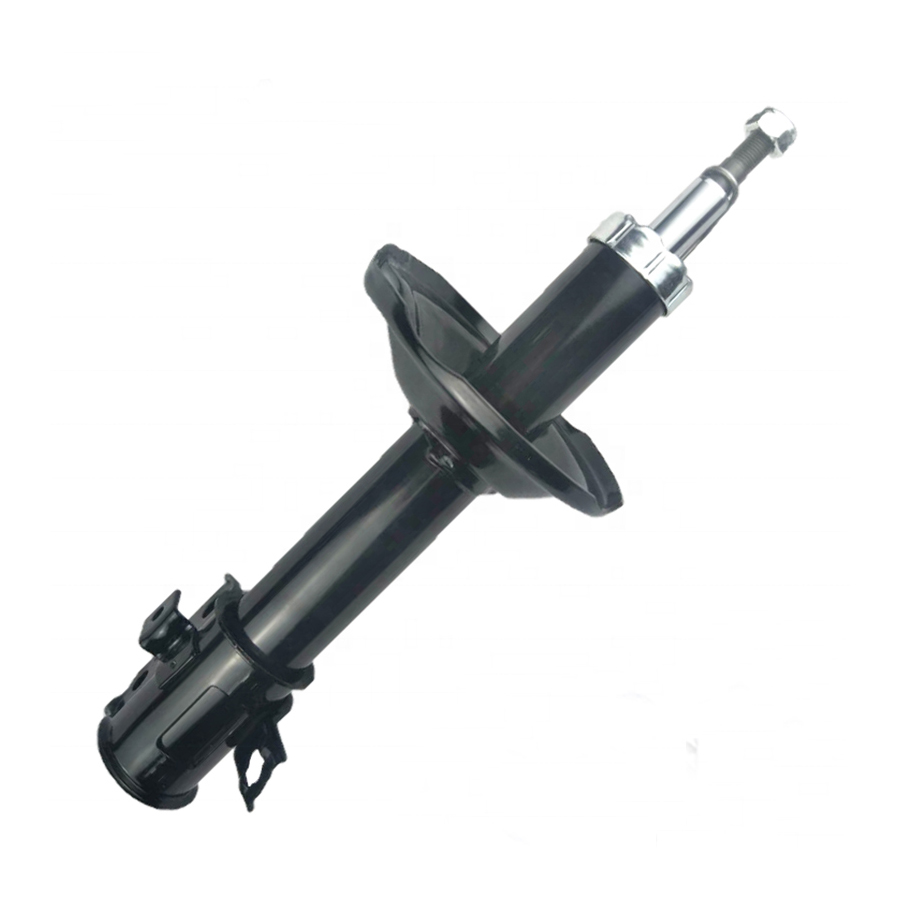
Twin-Tube vs. Monotube Architecture
Twin-Tube Dampers: Composed of an inner working cylinder and an outer reserve cylinder. As the piston shaft compresses, hydraulic fluid passes between the working tube and the outer reservoir through a base valve. While cost-effective and compliant for light-duty street driving, twin-tube designs possess limited outer surface area directly in contact with ambient air, making heat dissipation inefficient. Under sustained cycling—such as corrugated gravel roads—aeration and cavitation occur as hydraulic fluid mixes with high-pressure gas, leading to severe shock fade.
Monotube Dampers: Feature a single cylinder containing both oil and a high-pressure nitrogen charge, physically separated by a floating dividing piston. Because the oil chamber directly interfaces with the outer aluminum or steel body, heat dissipates far more efficiently. The high-pressure gas charge (typically 200–300 PSI) prevents oil cavitation under rapid movement, offering consistent velocity-sensitive damping needed for rock crawling in Moab or trail riding across North America.
| Feature / Spec | Twin-Tube Design | Monotube Design | Remote Reservoir System |
|---|---|---|---|
| Fluid Volume | Standard / Low | Moderate | Maximum (+50% to +100%) |
| Heat Dissipation | Limited (Trapped in outer tube) | Direct cylinder cooling | Superior (External body cooling) |
| Cavitation Resistance | Low (Prone to fluid foaming) | High (High-pressure nitrogen) | Exceptional (Isolated gas chamber) |
| Ideal Application | Budget replacement, daily driving | Moderate trails, light overland | High-speed desert, Baja, aggressive rock crawling |
The Remote Reservoir Advantage & Fluid Viscosity Dynamics
For high-speed desert running across environments like Baja or the Mojave Desert, standard monotube dampers reach thermal saturation quickly. This is where Remote Reservoirs (piggyback or hose-connected) become vital. By placing the dividing piston and nitrogen charge into an external cylinder, remote reservoir systems achieve two main engineering objectives:
- Increased Fluid & Surface Area: Fluid volume increases dramatically, reducing thermal buildup and stabilizing operational temperatures during continuous high-frequency impacts.
- Maximized Suspension Travel: Relocating the dividing piston out of the main shock body allows for a longer internal piston stroke, maximizing total shaft travel within tight vehicle packaging limits.
Fluid Viscosity Change & Shock Fade
As damper oil temperature rises during aggressive driving (often exceeding 250 degrees Fahrenheit / 120 degrees Celsius), kinetic fluid viscosity drops according to temperature curves. A reduction in fluid viscosity lowers hydraulic resistance across internal orifices, resulting in reduced damping force (shock fade). Premium off-road dampers utilize synthetic high-viscosity index (VI) fluids paired with remote reservoirs to maintain precise dampening characteristics across wide thermal ranges.
2. How Valving, Shim Stacks & Adjustable Damping Shape Ride Quality
While damper architecture defines thermal capacity, the internal fluid dynamics govern how the vehicle handles bumps, G-out bottoming, and cornering body roll. Ride quality and trail control are dictated by internal valving, flexible shim stacks, and external adjustable bypass systems.
Valving Mechanics and Flexible Shim Stacks
At the core of an off-road shock's main piston lies the valve assembly. Damping force is generated by forcing hydraulic oil through precision-machined ports, covered by thin, spring-steel discs called shim stacks. As shaft speed increases (measured in inches per second), fluid pressure flexes these shims, allowing fluid flow to scale dynamically.
- Low-Speed Damping (0 to 2 inches per second): Controls chassis motions such as body roll during cornering, brake dive, and slow rock crawling articulation. Governed primarily by bleed orifices.
- Mid-Speed Damping (2 to 15 inches per second): Controls washboard tracks, moderate rut impacts, and transient road disturbances. Managed by initial shim deflection.
- High-Speed Damping (15+ inches per second): Absorbs severe square-edge hits, G-outs, and high-speed jumps. Controlled by full shim deflection and high-flow main piston ports.
Customizing the thickness, diameter, and order of shims enables suspension engineers to tune linear, progressive, or digressive damping curves. A race-ready valving setup balances high-speed bump compliance with low-speed chassis control, preventing harsh impacts while eliminating body float.
Onboard Adjusters and Dual-Speed Compression (DSC)
External adjustable damping bridges the gap between highway stability and trail articulation. Advanced dampers feature dual-speed compression (DSC) adjusters mounted on the remote reservoir:
- High-Speed Compression Adjuster: Controls oil flow during rapid shaft displacement (e.g., hitting high-speed bumps or landing jumps).
- Low-Speed Compression Adjuster: Regulates body roll, pitch, and slow-speed ledge climbing stability.
Matching valving curves with suspension travel specifications is essential. Short-travel vehicles require more progressive valving to avoid harsh bottom-outs, whereas long-travel systems utilize position-sensitive bypass ports to ramp up damping only during the final inches of stroke.
3. Vehicle-Specific Upgrades: Jeep Wrangler, Ford Raptor & Budget Picks
Off-road suspension upgrades must be tailored to specific vehicle platforms, taking into account axle geometry, un-sprung weight, mounting configurations, and intended terrain.
Jeep Wrangler (JK/JL) Fitment Considerations
Jeep Wranglers feature solid front and rear axles. Key damper considerations include:
- Mounting Point Clearance: Upgraded dampers with larger 2.5-inch or 3.0-inch bodies require relocated reservoir mounts to avoid frame rails and sway bar end links during full articulation.
- Coil Spring Pairing: Damper length and valving must match the lift height (e.g., 2.5 inches to 4 inches lift) and spring rate. Insufficient rebound damping on heavy spring rates results in unpredictable vehicle bounce.
- Bushing Durability: Heavy-duty spherical bearings or high-durometer polyurethane bushings are necessary to resist twisting forces from solid axle flex.
Ford Raptor (F-150) High-Speed Performance Upgrades
Unlike solid-axle vehicles, the Ford Raptor utilizes an Independent Front Suspension (IFS) paired with a live rear axle designed for high-speed desert running. Upgrading a Raptor requires 3.0-inch or 3.5-inch diameter internal or external bypass shocks. Position-sensitive damping allows smooth ride comfort during normal suspension travel while providing hydraulic bump-stop control during high-velocity bottoming events.
Budget-Friendly Alternatives: High-Value Performance
For enthusiasts seeking substantial off-road gains without the cost of custom race shocks, direct-fit monotubes such as the Bilstein 5100 Series or entry-level 2.0-inch aluminum body shocks present an excellent alternative. Utilizing digressive self-adjusting valving, these dampers improve stability, fit factory mounting locations, and handle trail duties reliably without complex external reservoir plumbing.
4. Step-by-Step Installation & Fine-Tuning for Trail-Ready Performance
Proper installation and systematic fine-tuning ensure optimal damper safety, service life, and performance on the trail.
Installation Best Practices
- Pre-Installation Inspection: Inspect shock towers, frame mounts, and hardware. Replace worn bushings and mount kits with grade 8 or 10.9 metric fasteners.
- Torque Specifications: Tighten all mounting bolts to OEM or manufacturer torque specs while the vehicle is at ride height (on ground weight) to avoid pre-loading rubber bushings.
- Reservoir Mounting & Clearance Check: Secure remote reservoir hoses away from moving suspension linkages, hot exhaust components, and tire clearance paths through the full steering lock and suspension droop cycle.
Fine-Tuning Ride Quality on the Trail
Achieving optimal suspension balance involves a systematic tuning approach:
- Step 1: Ride Height & Spring Pre-load: Set sag so the vehicle utilizes approximately 30% to 35% of total travel for droop (extension) and 65% to 70% for compression.
- Step 2: Baseline Clicker Settings: Set onboard adjusters to the manufacturer’s recommended baseline (typically middle click count).
- Step 3: Test Route Evaluation: Conduct test runs over a known section of washboard and rocky terrain.
- If the rear kicks up over bumps: Increase rebound damping or decrease high-speed compression.
- If the ride feels harsh over small chatter: Decrease low-speed compression.
- If the vehicle sways excessively in corners: Increase low-speed compression.
5. Performance Validation: Shock Dyno Testing, Rebuilding & Race-Ready Setup
Shock Dyno Testing
In high-level off-road racing (such as Trophy Trucks or Ultra4), damper performance is quantified using a hydraulic shock dynamometer (dyno). A shock dyno cycles the damper at controlled velocities (from 0 to 100+ inches per second) while measuring generated compression and rebound force. Dyno graphs allow engineers to verify valving symmetry, evaluate thermal fade resistance, and detect internal cavitation before hitting the race course.
Rebuild Service Intervals & Maintenance
Unlike standard sealed road shocks, high-performance off-road dampers are fully rebuildable precision instruments. Over time, high temperatures degrade internal fluid seals, while oil breaks down due to shear stress.
| Usage Profile | Service Interval | Maintenance Key Tasks |
|---|---|---|
| Daily Street / Light Trail | 30,000 to 50,000 Miles | Fluid inspection, wiper seal check, shaft polish |
| Heavy Overland / Rock Crawling | 15,000 to 20,000 Miles | Full oil replacement, main seal kit rebuild, IFP seal check |
| Race / Desert Running | 1,000 to 2,500 Race Miles | Complete teardown, high-temp fluid renewal, seal & shim inspection, dyno validation |
Ready to Upgrade Your Off-Road Suspension System?
Whether you're prepping a Jeep Wrangler for Moab, dialing in a Ford Raptor for desert runs, or sourcing high-volume OE/custom damper manufacturing, Gerep Automotive Parts Mfg Co., Ltd. delivers precision-engineered damper solutions designed for extreme durability.
Contact our engineering support team today to discuss custom valving, vehicle-specific fitments, or high-performance damper manufacturing options.
Website: gerep-auto.com | Support: Engineering & Wholesale Inquiries Available Nationwide
Frequently Asked Questions (FAQ)
What are the benefits of a remote reservoir off-road damper compared to a standard monotube?
A remote reservoir increases fluid volume and external cooling surface area, significantly reducing fluid heat buildup and shock fade during sustained high-speed off-road driving. It also allows for greater piston travel within the main cylinder body.
How do I choose the right off-road damper for my Jeep Wrangler or Ford Raptor?
Select dampers based on your primary terrain, lift height, and payload weight. Jeep Wranglers benefit from dampers tuned for axle articulation and low-speed rock crawling compliance, while Ford Raptors require larger diameter bodies (2.5 inches to 3.5 inches) with position-sensitive bypass valving for high-velocity desert impacts.
What is the difference between adjustable damping and fixed valving in off-road shocks?
Fixed valving relies on pre-set internal shim stacks tuned for a specific baseline requirement. Adjustable damping incorporates external clickers (such as Dual-Speed Compression adjusters) that allow driver tuning of hydraulic bypass circuits to adapt to varying terrain and load conditions on the fly.
How often should I rebuild my off-road dampers, and what are the signs they need service?
Rebuild intervals range from 1,000 to 2,500 miles for race applications to 20,000 to 50,000 miles for highway and light trail use. Signs requiring service include visible fluid leaks along the shaft, diminished damping performance (excessive bouncing), or harsh noise during compression.
Can I install off-road dampers myself, and what special tools are required?
Yes, most direct-fit dampers can be installed using standard shop mechanics tools (torque wrench, socket sets, jack stands, pry bars). However, spring compressors are needed for coilover assemblies, and high-pressure nitrogen charging units are required when servicing or custom-tuning rebuildable shocks.
What are some budget-friendly off-road damper brands that still offer strong performance?
Direct-fit monotubes such as the Bilstein 5100 series or factory-tuned replacement series provide elevated off-road dampening, digressive valving, and superior corrosion resistance at an accessible price point compared to custom race bypass systems.
How does suspension travel specification affect damper selection for rock crawling vs. high-speed desert running?
Rock crawling prioritizes maximum overall travel and low-speed articulation compliance to maintain tire contact on uneven rocks. High-speed desert running demands larger damper bodies, position-sensitive bypass circuits, and heavy compression valving to absorb rapid high-velocity impacts and prevent bottoming out.
Latest News
-
4x4 Shock Absorbers: Choosing, Replacing, and Upgrading for Off-Road SUVs
Your 4x4 feels unsettled on gravel, the rear end sways after a bump, and the tyres are wearing fast...2026-09-11
-
Shock Absorber Replacement Cost: Average Prices and Expert Labor Guide
Your service advisor hands you an estimate for replacing two rear shock absorbers: $680 for parts, ...2026-09-04
-
Struts vs Shocks vs Springs: Suspension Parts Explained for Car Owners
Your suspension starts making noise, and the shop says you need a new strut. You ask whether that i...2026-08-28
-
Shocks vs Struts: What's the Difference and How to Choose the Right Suspension Part
When one repair shop says your car needs a strut and another says it needs a shock absorber, the tw...2026-08-21
-
Coilovers vs Struts: Key Differences, Ride Quality, and How to Choose the Right Setup
The Short Answer Standing in front of two suspension parts that look almost identical, it is easy t...2026-08-14
-
Comprehensive Guide to Shock Absorber Materials: Engineering Metallurgy, Polymers, and Advanced Selection Criteria
In modern automotive suspension design, damping characteristics are directly defined by material ...2026-08-06
Quick Links
Contact Us
-
 +86-13757453333
 -
 +86-572-8355557
 -
 Caroline@gerep.cn
 -
 No. 36, South Zhenxing Rd., Zhongguan Town, Deqing County, Huzhou, Zhejiang, China
Please Enter Your Information
Copyright © Gerep Automotive Parts Mfg Co., Ltd. All Rights Reserved.
Custom Variable Durable Shock Absorbers Manufacturers
