 EN
EN  English
 Español

News
 Home / Blogs / Industry News / Comprehensive Guide to Shock Absorber Materials: Engineering Metallurgy, Polymers, and Advanced Selection Criteria
 Comprehensive Guide to Shock Absorber Materials: Engineering Metallurgy, Polymers, and Advanced Selection Criteria
 2026.08.06
 Industry News
In modern automotive suspension design, damping characteristics are directly defined by material selection. As vehicles encounter extreme operational stress—ranging from freezing winter road salts in the American Rust Belt to high-temperature desert trails—understanding the mechanical properties of metals, polymers, and structural composites is essential for maximizing fatigue life, ride comfort, and structural reliability.
Metal Alloys: The Backbone of Automotive Shock Absorber Materials
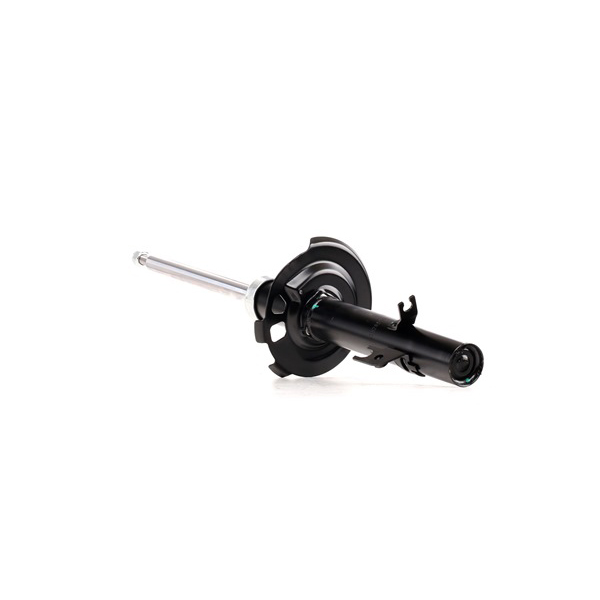
Metal alloys constitute the structural core of damper units, taking on high axial forces, bending moments, and severe hydraulic pressures. Mild steel, medium-carbon steel (such as AISI 1045), and specialized alloy steels (such as 4140 chromoly) remain the principal choices for damper bodies and piston rods due to their superior tensile yield strength and high toughness.
To withstand extreme mechanical cycles, piston rods undergo precision induction hardening followed by hard chrome plating (typically 15 to 25 microns thick). This creates a scratch-resistant exterior layer while maintaining a flexible core capable of absorbing road impacts without brittle fracture. Corrosion resistance is a paramount engineering priority, particularly for vehicles operating in northern regions where sodium chloride and calcium chloride are heavily applied during winter. Standard electroplating yields limited salt-spray performance; consequently, high-end components utilize multi-layer zinc-nickel coatings or micro-arc oxidation, achieving over 500 to 1,000 hours of ASTM B117 salt spray test survival without red rust formation.
Fatigue Life Index = (Ultimate Tensile Strength / Operating Stress Amplitude) * Corrosion Resistance Factor
Forging and precision stamping play critical roles in alloy processing. Cold-drawn seamless steel tubing provides precise internal diameter tolerances necessary for consistent hydraulic sealing, while forged steel rod ends ensure dynamic load distribution. Lightweighting demands have accelerated the adoption of structural aluminum alloys, notably 6061-T6 and 7075-T6. Extruded aluminum shock bodies offer an impressive strength-to-weight ratio, reducing unsprung mass by up to 35% to 40% compared to equivalent steel bodies. Additionally, aluminum boasts superior thermal conductivity (approximately 150 to 200 W/m.K versus steel's 50 W/m.K), enabling rapid dissipation of fluid heat under continuous high-frequency displacement.
Polymer and Composite Solutions: From Polyurethane to Sorbothane
While metal provides the structural skeleton, elastomeric polymers control high-frequency isolation, impact buffering, and compliance alignment. Elastomers mitigate Noise, Vibration, and Harshness (NVH) while resisting fluid degradation, ozone exposure, and mechanical tearing.
| Material Type | Hardness Range | Energy Absorption / Damping | Thermal Stability | Fluid & Chemical Resistance |
|---|---|---|---|---|
| Natural Rubber (NR) | 45 - 70 Shore A | Moderate (High Resilience) | -40°C to +80°C | Poor against petroleum oil; fair against water |
| Polyurethane (PU) | 70 - 95 Shore A / 50D | High Load Capacity, Low Deflection | -30°C to +90°C | Good against oil and grease; vulnerable to hydrolysis |
| Nitrile Rubber (NBR) | 60 - 80 Shore A | Moderate Damping | -40°C to +120°C | Excellent oil and hydraulic fluid compatibility |
| Sorbothane | 30 - 70 Shore 00 / A | Extremely High (Viscoelastic) | -20°C to +70°C | Moderate resistance; specialized for shock isolation |
| Silicone Elastomers | 40 - 80 Shore A | Consistent over wide temp range | -60°C to +200°C | Good weatherability; moderate oil resistance |
Natural Rubber (NR) remains the industry benchmark for standard OEM mounting bushings due to its superb internal hysteresis and broad vibration absorption spectrum. However, under prolonged oil exposure or ozone weathering, natural rubber suffers from micro-cracking and compression set. Polyurethane (PU) provides substantially higher tensile strength and abrasion resistance, making it the material of choice for high-performance applications. By tailoring the ratio of polyols to isocyanates, engineers can tune PU hardness from 70 Shore A to over 55 Shore D.
Viscoelastic materials such as Sorbothane exhibit exceptional shock attenuation, absorbing up to 94.7% of impact energy by converting mechanical force into localized thermal energy. In sealing elements, Nitrile Rubber (NBR) and Fluorocarbon Elastomers (FKM) ensure leak-free operation when in direct contact with mineral-based or synthetic hydraulic fluids, preserving seal elasticity under internal hydraulic pressures exceeding 10 MPa.
Material Selection Criteria: Balancing Strength, Weight, and Durability
Designing or selecting shock absorber materials requires evaluating complex trade-offs across operational domains. Vehicle dynamics engineers employ a structured selection framework based on load spectra, environmental exposure, and economic constraints.
Engineering Selection Matrix Across Operating Conditions
- Daily Commuting: Prioritizes high NVH suppression and multi-year maintenance-free lifespan. Standard zinc-plated steel bodies combined with natural rubber or low-durometer NBR bushings offer optimal cost-efficiency.
- Track & Motorsport: Demands minimum thermal fade and minimal elastic compliance. Anodized 6061-T6/7075-T6 aluminum bodies paired with spherical metal bearings (PTFE-lined alloy steel) maximize steering feedback and transient response.
- Off-Road & Heavy Commercial: Requires maximum stone-chip resistance and extreme thermal stability. Heavy-wall steel bodies or thick aluminum units with high-durometer polyurethane bushings (85-95 Shore A) prevent dynamic deformation under high load cycles.
Material testing must adhere strictly to international standards. Structural fatigue endurance is measured according to ISO 16750 or ASTM E466 axial fatigue protocols, requiring minimum cycle lives of 1,000,000 to 3,000,000 cycles without pressure loss or structural yielding. Fastener compatibility must also be addressed: connecting steel brackets to aluminum bodies requires proper isolation or specialized anti-seize surface coatings to prevent galvanic corrosion.
Galvanic Corrosion Rate = (Electrolytic Potential Difference * Contact Area) / Electrical Resistance
Aftermarket Upgrades and Emerging Trends in Shock Absorber Materials
The aftermarket landscape increasingly adopts aerospace-grade materials to enhance heat dissipation and structural strength. Hard-anodized aluminum bodies create an aluminum oxide surface layer reaching 50 Rockwell C hardness, providing exceptional resistance against airborne debris and gravel impact.
Ultralight materials like carbon fiber composite sleeves and titanium springs are transitioning from professional racing into premium aftermarket setups. Carbon fiber outer sleeves reduce weight while adding circumferential reinforcement against high internal fluid pressure pulses. Concurrently, manufacturing innovation is moving toward Additive Manufacturing (3D printing) of lattice-structure TPU (Thermoplastic Polyurethane) elastomers. These engineered lattices enable variable density damping, where a single physical component exhibits soft response during minor road imperfections and rapid stiffening under hard compressions.
Recyclable eco-composites and bio-based polyurethane materials are also emerging to meet global carbon-reduction targets, offering comparable tensile properties while lowering life-cycle environmental impact.
Engineering Superior Suspension Performance with Gerep
Selecting the optimal shock absorber materials requires balancing structural strength, corrosion resistance, thermal management, and weight efficiency. At Gerep Automotive Parts Mfg Co., Ltd., we combine advanced metallurgical processing, specialized surface coatings, and premium elastomeric components to deliver OEM-grade and high-performance aftermarket suspension solutions.
Whether you require custom manufacturing, high-durability replacement parts, or technical engineering support, our team is ready to assist your supply chain requirements.
Visit gerep-auto.com & Request a ConsultationFrequently Asked Questions (FAQ)
1. What is the best shock absorber material for off-road driving?
For off-road driving, heavy-wall hard-anodized 6061-T6 or 7075-T6 aluminum shock bodies combined with high-durometer polyurethane bushings are ideal. Aluminum provides rapid heat dissipation during continuous off-road cycling, while polyurethane withstands heavy impact and mud exposure better than standard rubber.
2. How do polyurethane and rubber bushings compare for vibration damping?
Rubber bushings offer superior high-frequency NVH (Noise, Vibration, and Harshness) isolation, providing a quieter, smoother ride for daily driving. Polyurethane bushings are stiffer, offering higher load capacity, superior steering response, and longer wear life, though they transmit slightly more road vibration.
3. Is aluminum or steel better for shock absorber bodies?
Aluminum is superior for heat dissipation and weight reduction, making it ideal for performance, racing, and high-end off-road use. Steel is more cost-effective, offers high resistance to structural impacts from road debris, and remains the primary choice for standard passenger and heavy commercial vehicles.
4. What is the cost difference between standard and high-performance shock absorber materials?
High-performance materials like forged aluminum alloys, hard-chrome plated shafts, and specialized polyurethane bushings generally cost 30% to 100% more than standard mild steel and rubber components due to advanced machining, heat treatment, and raw material expenses.
5. How can I prevent corrosion on my vehicle's shock absorbers?
Ensure shock absorbers feature high-grade protective coatings such as e-coating, zinc-nickel plating, or hard anodization. Regular undercarriage washing during winter months to remove salt deposits and applying wax-based protective sprays will further prolong material lifespan.
6. What testing standards should shock absorber materials meet?
Key testing standards include ASTM B117 for salt-spray corrosion resistance, ISO 16750 for environmental dynamic endurance, and ASTM E466 for multi-axis fatigue testing, ensuring components endure over 1,000,000 operating cycles under load.
7. Are there environmentally friendly alternatives to traditional shock absorber materials?
Yes, manufacturers are increasingly adopting bio-based polyurethane elastomers derived from plant oils, fully recyclable aluminum housing alloys, and hexavalent chromium-free electroplating processes to reduce environmental footprint.
Latest News
-
How Shock Absorbers Improve Vehicle Performance: Damping, Braking & More
At 96 km/h, a family sedan with worn shock absorbers can need roughly six more metres of road to s...2026-09-22
-
Bypass Shocks: Internal vs External Explained for Truck and SUV Owners
When your vehicle’s suspension starts feeling floaty or bottoms out over bumps, the term “bypass sh...2026-09-17
-
4x4 Shock Absorbers: Choosing, Replacing, and Upgrading for Off-Road SUVs
Your 4x4 feels unsettled on gravel, the rear end sways after a bump, and the tyres are wearing fast...2026-09-11
-
Shock Absorber Replacement Cost: Average Prices and Expert Labor Guide
Your service advisor hands you an estimate for replacing two rear shock absorbers: $680 for parts, ...2026-09-04
-
Struts vs Shocks vs Springs: Suspension Parts Explained for Car Owners
Your suspension starts making noise, and the shop says you need a new strut. You ask whether that i...2026-08-28
-
Shocks vs Struts: What's the Difference and How to Choose the Right Suspension Part
When one repair shop says your car needs a strut and another says it needs a shock absorber, the tw...2026-08-21
Quick Links
Contact Us
-
 +86-13757453333
 -
 +86-572-8355557
 -
 Caroline@gerep.cn
 -
 No. 36, South Zhenxing Rd., Zhongguan Town, Deqing County, Huzhou, Zhejiang, China
Please Enter Your Information
Copyright © Gerep Automotive Parts Mfg Co., Ltd. All Rights Reserved.
Custom Variable Durable Shock Absorbers Manufacturers
